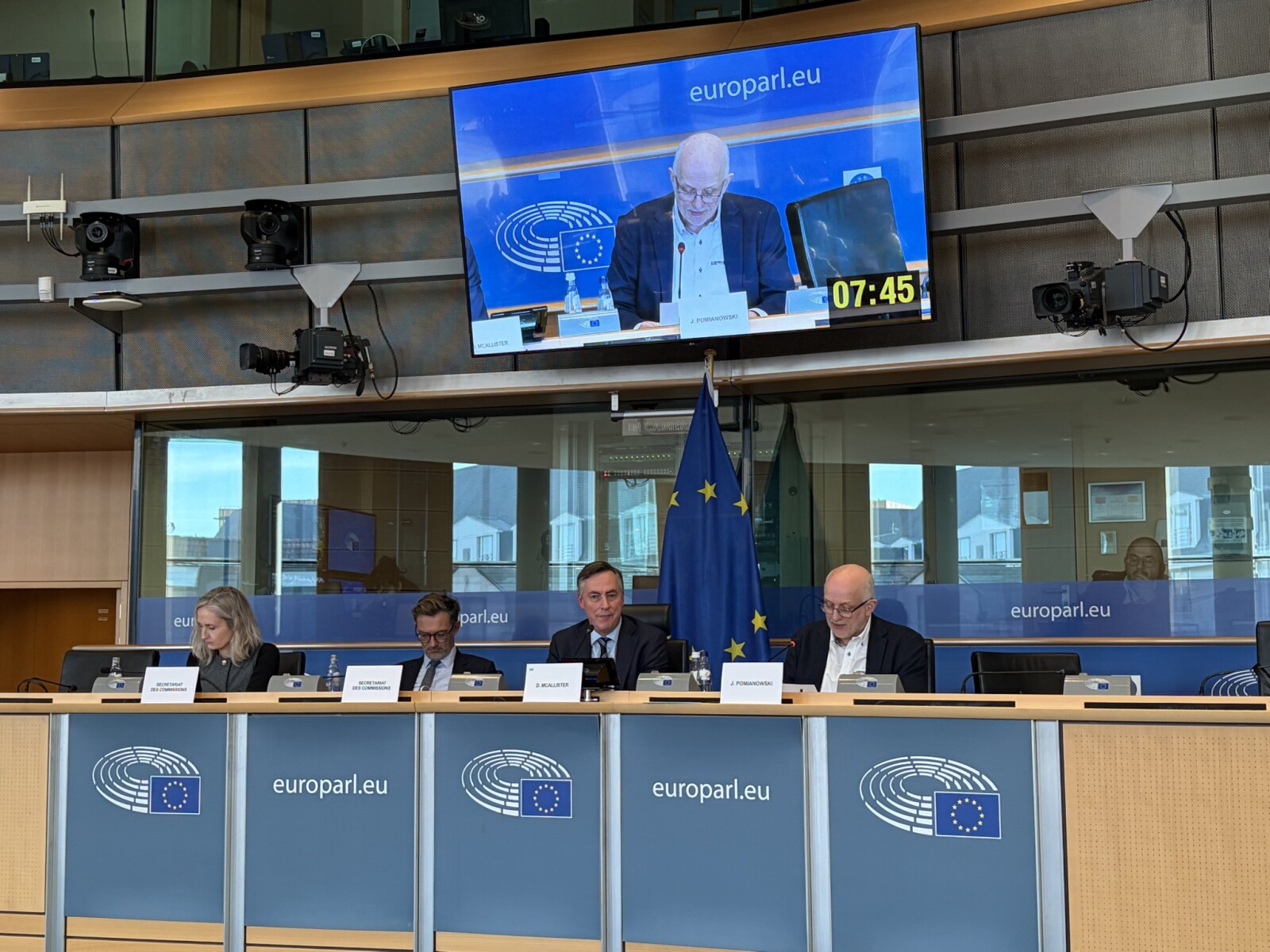
On 17 March, EED Executive Director Jerzy Pomianowski launched the EED Annual Report 2025 in an annual exchange with the Committee on Foreign Affairs in the European Parliament (AFET Committee)
David McAllister, Chair of the AFET Committee and Chair of EED’s Board of Governors, welcomed Jerzy Pomianowski to Parliament.
Pomianowski noted that to date EED has provided over 3,300 grants to democracy actors in the European Neighbourhood and beyond, representing a total of 3,300 grants.
He stated that following the US funding cuts, EED was able to step up to support civil society and independent media in the Neighbourhood. EED provided 62 percent more grants in 2025 than the previous year, with 34 percent additional budget.
Pomianowski stated that the EED Annual Report 2025 is built around six impact briefs on key contexts where EED works, namely Ukraine, Moldova, Belarus, Albania, Turkey and Syria. The impact briefs focus on the tangible achievements of EED’s partners, many of whom work in the most difficult of contexts.
In Moldova, the impact brief demonstrates how long-term investment in the democracy eco-system was instrumental in safeguarding the country’s European future during the 2025 elections.
In Ukraine, the impact brief shows how civic activism remains robust even in wartime, and civil society is continuing to demand accountability and transparency, as witnessed during July’s “cardboard revolution”.
In Syria, EED’s partners were ready to work when the Assad regime fell in late 2024, thanks to EED’s consistent support over the past decade. Pomianowski noted his visit to Damascus the previous September, and the determination of these democracy actors to shape a pluralistic and democratic Syria.
In Belarus, the impact brief describes the extraordinary audiences that independent media continue to reach inside the country despite intensifying repression, breaking the information blockade.
In Albania, the impact brief noted that EED investigative media partners are exposing corruption and forcing state institutions to respond.
Finally, in Turkey, EED support to Kurdish cultural and language initiatives has provided vital spaces for enabling public expression.
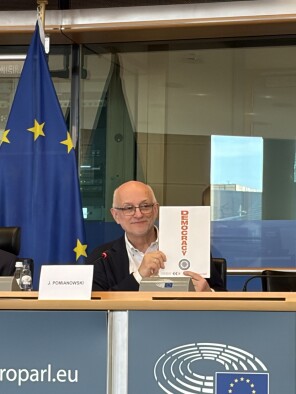
Referring to the European Democracy Shield, Pomianowski commended the inclusion of an external dimension, noting that the EU requires an “active shield” that positions the EU as a proactive force, capable of shaping its neighbourhood and securing its democratic future.
He stated that building resilient pro-European countries in the EU neighbourhood is a security imperative. This is Europe’s existential democratic frontline, and he underlined the importance of learning from our neighbours and the need for early-warning systems. Finally, he noted that in today’s rapidly changing geopolitical and technological environment, democratic survival requires innovation, rapid response and constant adjustments.
Referring to the Multi-annual Financial Framework (MFF), Pomianowski stressed the importance of providing adequate, flexible and threat-responsive funding under the Global Europe instrument.
Several MEPs intervened following Pomianowski's address.
Michael Gahler MEP (EPP) encouraged EED to continue its good work.
Sergey Lagodinsky MEP (Greens/EFA), also a member of the EED Board of Governors, stated that the Board ensures the transparency of EED’s work. He noted the importance of EED’s work today and into the future to support all those who need European assistance to protect and save their democracies.
Bernard Guetta (RENEW), a member of the EED Executive Committee, underlined the importance of EED for Europe in today’s fight for democracy.
Robert Biedroń MEP (ASD) noted the importance of ensuring budgetary earmarking for democracy, human rights, women’s rights and rule of law in the Global Europe instrument.
András László MEP (Patriots) requested that the names of EED partners be published. Pomianowski responded that EED partners’ identity are protected for their security. He stated that EED is transparent through its internal reporting mechanism, however it is not transparent to the dictators and others not observing human rights, who are arresting and killing people, and putting them in gulags, as was the case with Alexei Navalny, who was eventually killed in the gulag.