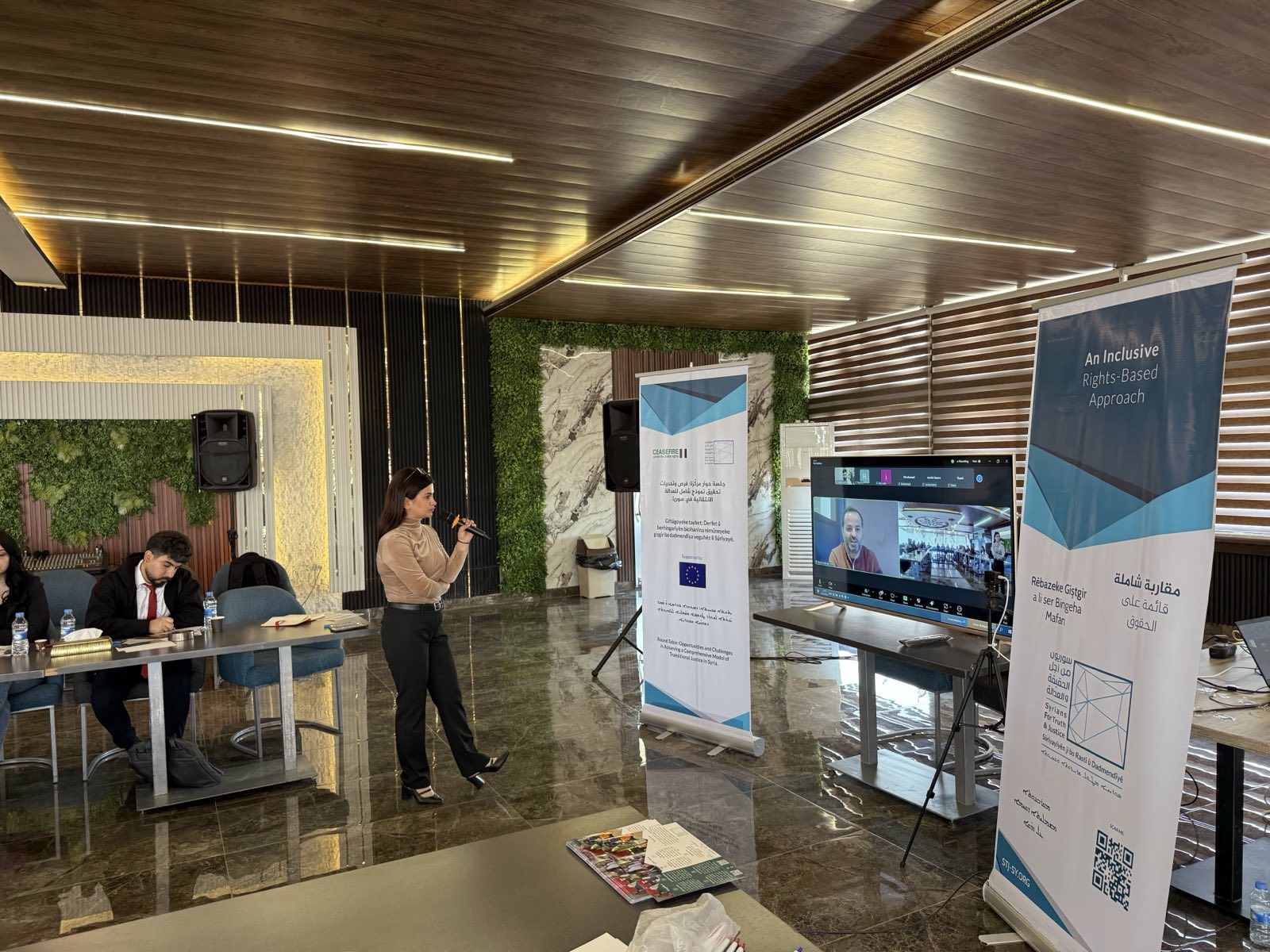
Cover photo: © Syrians for Truth and Justice
A civil society ecosystem nurtured during years of repression is seizing the opportunity at this moment of democratic opening
The collapse of the Assad regime on 8 December 2024 after 53 years of authoritarian rule, ended decades of systematic repression and human rights violations and ushered in a new era for Syria. This sudden transition created unprecedented opportunities for civil society to push for a democratic transition.
The change was dramatic. Classified as a “closed autocracy” in the bottom 10 percent of V-Dem’s liberal democracy index, the country was divided into four regions, each controlled by distinct military forces with parallel political structures. The humanitarian crisis was severe: 17 million Syrians required humanitarian assistance, with poverty rates at 69 percent and extreme poverty at 27 percent.
Against this backdrop, global democracy funding was contracting, and independent media, grassroots activism, and human rights monitoring operated under severe constraints with no clear path toward democratic change. The prospects for democracy appeared nearly non-existent. Yet throughout this difficult period, EED continued to support civil society actors and independent media in the country, responding to their evolving needs amid ongoing instability. As civic space continued to narrow, flexible and confidential forms of assistance proved essential to maintaining this engagement.
In the immediate aftermath of the regime’s collapse, many actors returned from exile, community initiatives gained visibility, youth-led groups emerged, and independent journalists could work openly for the first time in years. One EED partner described this period as one of both “excitement and astonishment”. As one civic actor shared, “For the first time, we saw the sea”, a symbol of both the new freedom of movement and reconnection with the whole of Syria.
However, this fragile democratic opening faced immediate threats: sectarian violence, inadequate inclusive governance structures, and the risk of restrictive regulations being reimposed on civil society. The timing coincided with a crisis in international support. The US foreign aid freeze directly affected Syrian NGOs and media outlets at the precise moment when their contribution to democracy promotion was most instrumental.
CRISIS RESPONSE FOLLOWING YEARS OF CONSISTENT STRATEGIC PRESENCE
When the Assad regime collapsed, EED immediately launched an Emergency Funding Mechanism to help partners quickly react, seize the opportunity and capitalise on the transitional moment, to steer and shape a pluralistic, inclusive and democratic Syrian society.
Several weeks later, this rapid response was expanded to organisations affected by the US funding freeze. This funding proved vital for democracy actors, filling a critical gap at a time when civic work was vital to the transition process, and most international support stagnated or evaporated.
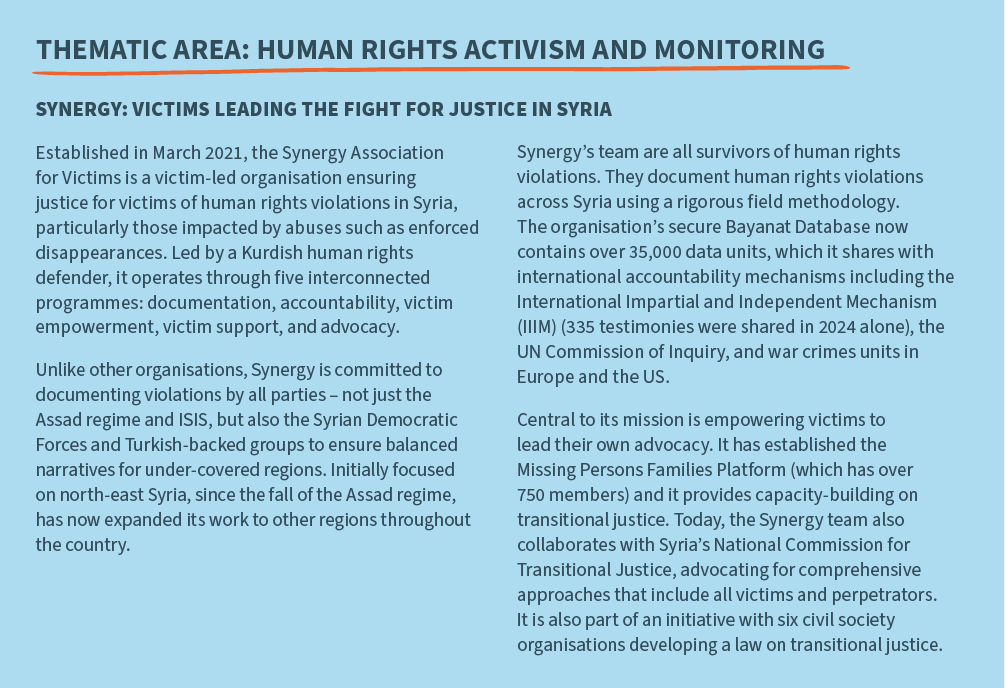
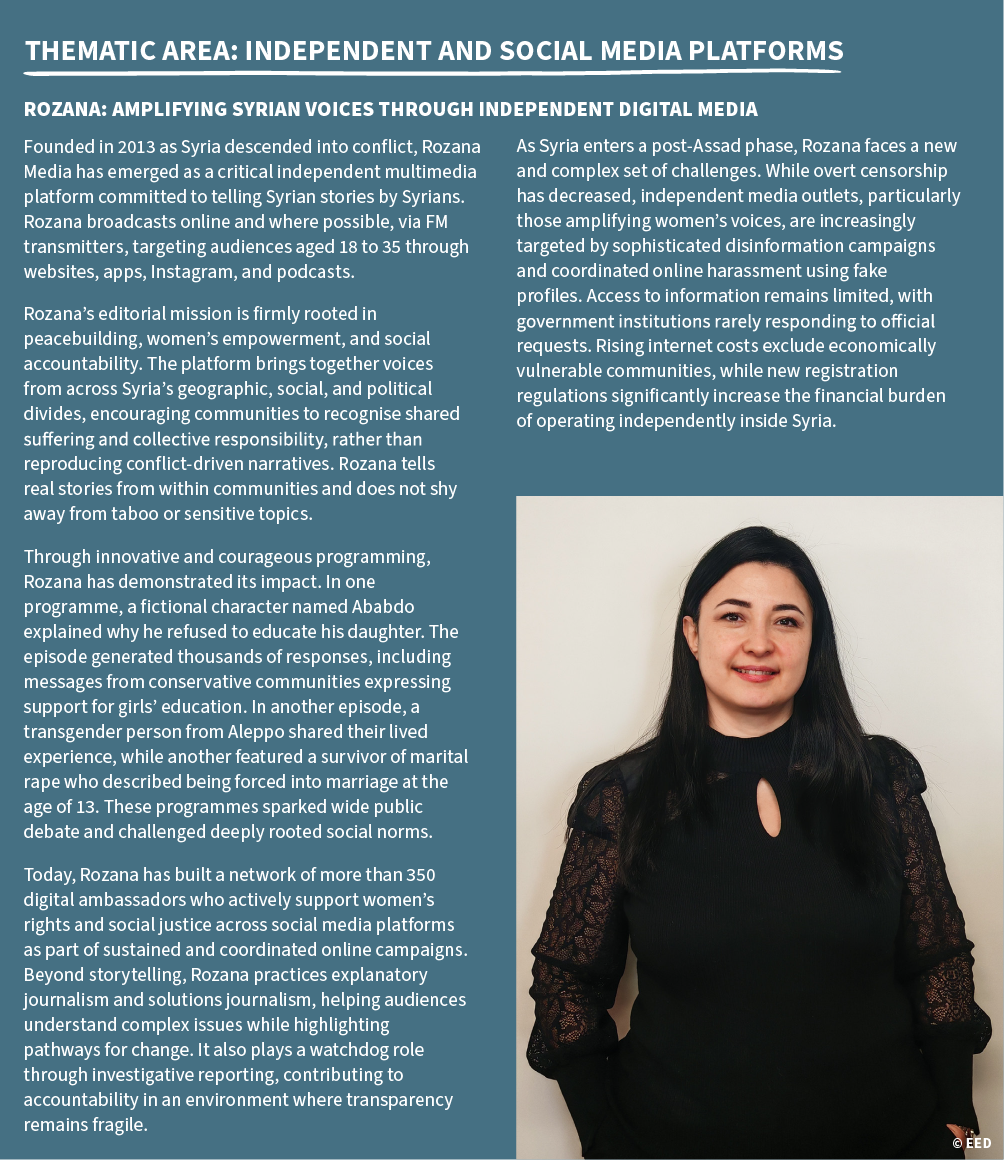
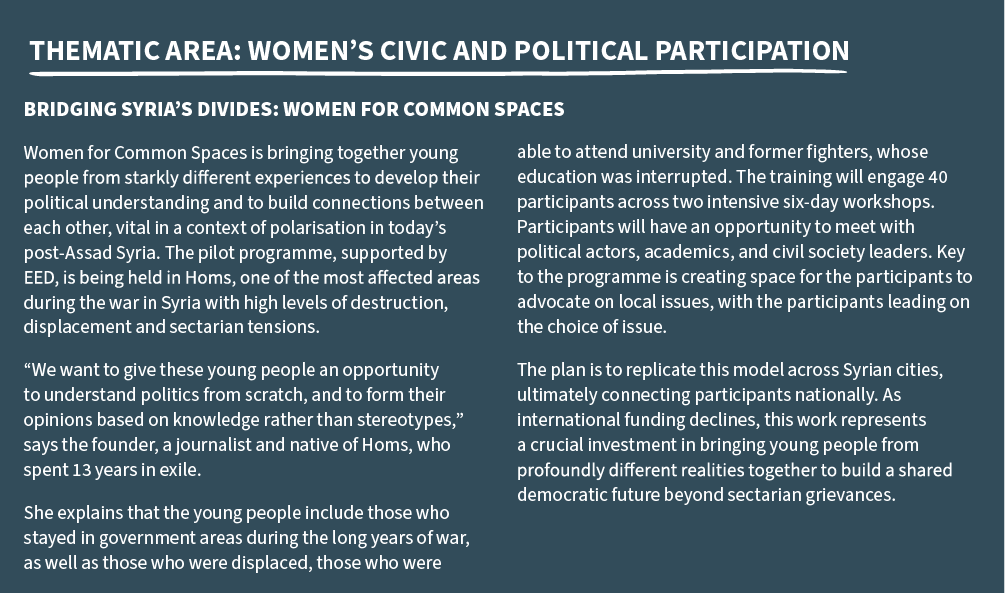
During this first year of political transition, EED has supported a wide range of pro-democracy actors, who have mobilised across the country to seize this unique momentum.
These include:
EED’s response to these emerging opportunities and challenges for Syria’s pro-democracy movement were built upon and were informed by EED’s strategic presence in Syria throughout the final years of the Assad regime. Between 2020 and 2024, approximately 19 percent of regional MENA grants were provided to Syrian partners.
EED primarily provided core funding and start-up funds through a demand-driven model, deliberately targeting chronically under-resourced areas that other donors overlooked. This approach prioritised flexibility, local ownership, and long-term sustainability over short-term project deliverables.
According to the assessment in the 2025 EED external evaluation covering the 2020-2024 period, EED’s impact in Syria stemmed from three interconnected approaches:
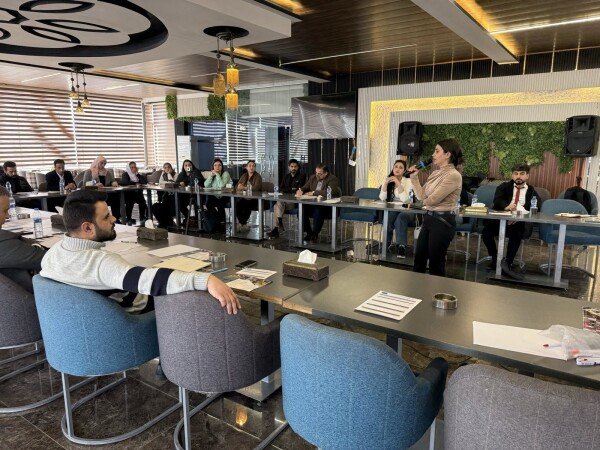
EED helped to maintain operations for key civil society and independent media when prospects for democracy were “nearly non-existent”. As one EED partner described, “they instilled hope in many despairing and lost souls—activists, artists, and the general public yearning for a dignified life and peace.” These initiatives equipped local communities with the skills and platforms needed to participate meaningfully in civic dialogue. This sustained support meant that a resilient grassroots civil society infrastructure was in place when the Assad regime collapsed, and it was operational and ready for the moment of transition.
An example of this resilience was civil society’s strong reaction to the October 2025 directive by the authorities requiring civil society organisations to obtain priorgovernment approval for foreign funding or to join international bodies among other restrictive provisions. Civil society actors, including many EED partners, published a joint-position expressing their concerns about the reimplementation of the former regime’s repressive Associations Law to restrict NGO activities
EED’s Emergency Funding Mechanism launched immediately after regime collapse filled a critical gap at a moment when other donors needed time to adjust their programming and funding strategy to the new context, a gap that was further exacerbated by the US funding freeze. This enabled partners to capitalise on the transitional moment and prevented the collapse of key democracy actors at this crucial juncture.
In previous years, EED provided vital support to a variety of independent media outlets inside Syria and in exile, ranging from well-established entities to smaller, local community-based platforms. This support allowed them to break the Assad regime’s information monopoly and combat disinformation from multiple armed and political actors. They were able to connect with diverse audiences – from Syrian diaspora to international policy actors to readers within the country – while creating a unique space for minority voices in public discourse.
Today, independent journalists are reporting on developments, elevating critical public debates, ensuring accountability, continuing to cover taboo topics and factchecking competing narratives from Syria’s emerging power broker. Their reporting is reaching audiences throughout the country. However, the situation remains complicated with many media still operating underground.
The situation in Syria today remains precarious. Over the past 12 months, the country has witnessed both progress and setbacks, with the formation of a new government under former Idlib-based leadership, a National Dialogue Conference to address issues such as transitional justice and economic reform, a constitutional declaration, and parliamentary elections in September. These developments have sparked criticism for their lack of inclusivity, excessive centralisation of presidential powers, and underrepresentation of women and minorities. Sectarian violence erupted in coastal regions in March and in the Suweyda governorate in July, resulting in over 2,000 deaths and widespread displacement. In March, the Syrian Democratic Forces in the northeast reached a landmark agreement with Damascus for integration into state institutions, though implementation has faced significant obstacles and at the time of writing has not yet been achieved.
However, despite these challenges, this transition period marks a unique opportunity for Syria’s democratic future. By strengthening Syria’s civic infrastructure, and supporting democratic transition and inclusive governance, EED partners are helping to build the conditions necessary for long-term stability. EED partners in independent media and fact-checking initiatives are combatting divisive narratives and extremist ideologies that threaten Syria’s social fabric and stability. In an environment where multiple actors are competing to shape Syria’s future, pluralistic, locally owned media are countering authoritarian influence and disinformation campaigns.
This article includes an AI-generated audio version to offer readers an additional way to engage with the content. As the narration is produced using automated voice technology, occasional inaccuracies may occur.