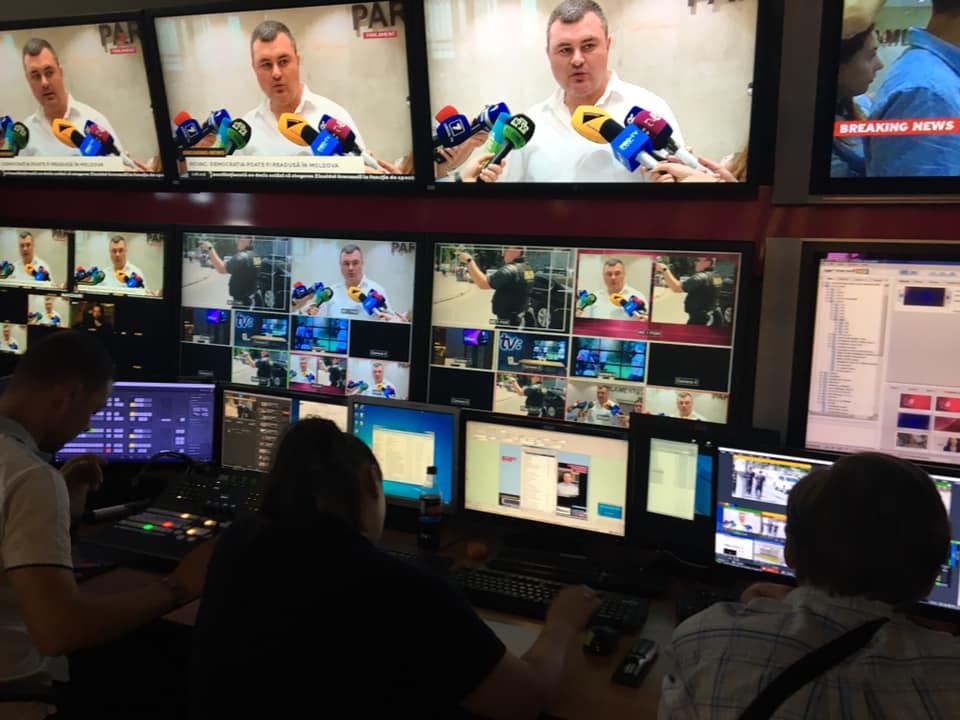
Cover photo: © TV8
With EED’s timely support, independent media win Europe’s most intense disinformation war
Moldova entered the 2025 election cycle under unprecedented hybrid pressure from Russia – a campaign that blended AI generated disinformation, decentralised Telegram networks, foreign financing schemes and targeted narratives aimed at fracturing society. At the very moment this pressure intensified, major international donors withdrew, leaving independent media with significant funding gaps. Despite the odds, Moldova seems to have emerged from the elections with a better informed electorate and a more resilient democracy.
This achievement was anchored in a media–civic ecosystem that had been steadily built over years and that was able to continue operating under acute stress. EED has contributed to the development of this ecosystem through consistent grant support over the past twelve years, that was reinforced at a moment when the sector faced a sudden funding collapse. This meant that independent journalists, analysts and regional newsrooms were able to continue contributing to a vital information infrastructure that allowed Moldovans to withstand the most sophisticated interference the country has faced since independence.
A HYBRID ASSAULT CONVERGING WITH A FUNDING CRISIS
For more than a decade, Moldova has lived with persistent Russian influence efforts, but the 2024 to 2025 cycle marked a major escalation, as the country held elections and a referendum on EU Accession.
During the 2025 pre-election period, EED partner WatchDog recorded 10,000 posts on Telegram alone daily, with up to 80 percent of these posts containing disinformation. “If we are to debunk all the Telegram posts, it would take us two years,” they say. Much of the content was AI-generated or coordinated through decentralised groups based in Moldova or directly operated from Russia, designed to evade detection. Paid influencer networks emerged, operating anonymously and relying on micro-targeted messaging to Russian-speaking audiences in the north, Gagauzia and Transnistria. Offline structures, including church-affiliated groups, amplified digital manipulation.
As EED partner Alexei Tulbure of the online Defacto series and the Trigger talk show put it: “Russia spent hundreds of millions of Euros to destabilise Moldova. They wanted to regain control without a single shot – without rockets, without artillery, without tanks. Simply by changing the government.”
This assault intensified precisely when Moldova’s media sector became financially vulnerable. In early 2025, the withdrawal of US democracy funding removed hundreds of thousands of euros from the ecosystem almost overnight. Newsrooms already operating on thin margins faced immediate gaps. Several reported being weeks away from cutting investigative projects or reducing broadcasting.
The coincidence of heightened interference and collapsing funding created a major risk. Moldova’s information resilience depended to a significant extent on whether independent outlets could continue to function during the most consequential election period in a decade, as parliamentary elections were held in September.
SUSTAINING AN INFORMATION INFRASTRUCTURE AT A CRITICAL MOMENT
The resilience shown in 2025 did not materialise spontaneously. EED has played a distinctive role in contributing to building Moldova’s independent media architecture, often supporting outlets at a start-up point when few donors were willing to take risks. In 2025 alone, EED supported 20 media partners for an awarded total of over €2 million.
EED support focused on three areas: investigative capacity, cross-linguistic reach and a network of regional outlets embedded in communities most exposed to Russian narratives. This approach created the backbone of Moldova’s informational defence.
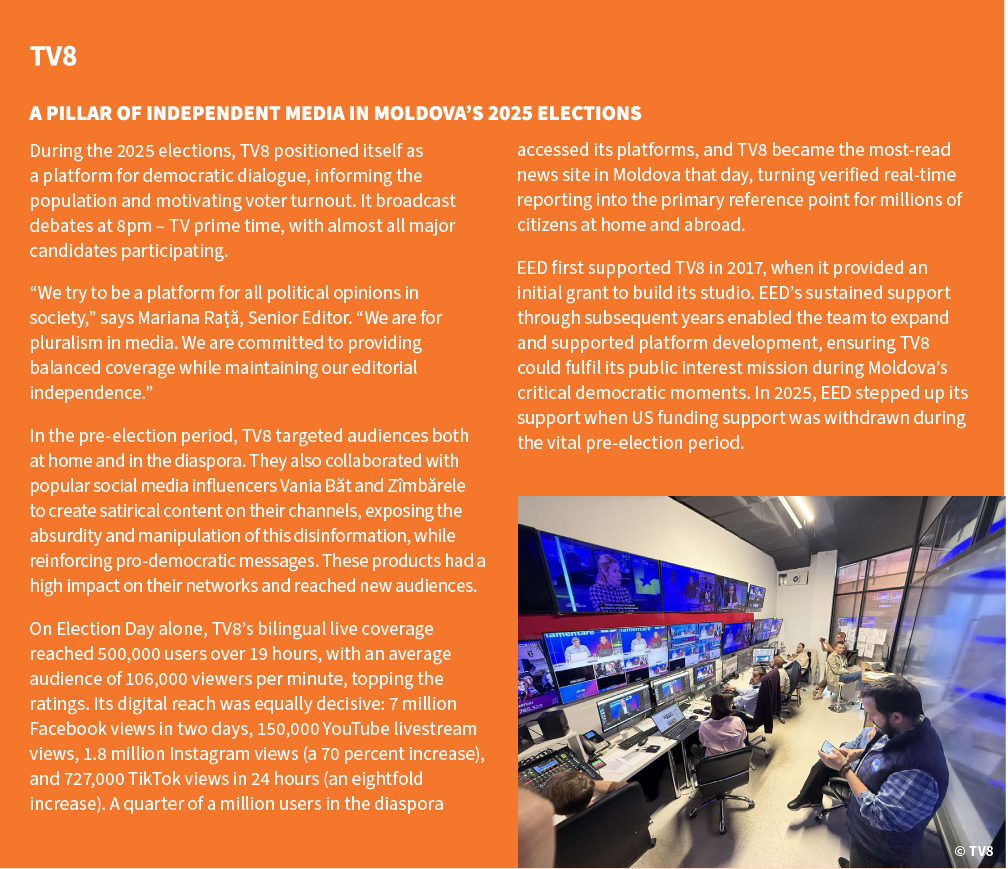
TV8, now one of the country’s most trusted news organisations, grew from a small, vulnerable start-up into a national newsroom with EED as a consistent early supporter. Its leadership is clear about the importance. “Without EED, TV8 might not exist,” co-founder Mariana Rață has said.
EED’s long-term support also contributed to the formation of WatchDog, the country’s leading analytical actor on disinformation; NordNews, the main investigative outlet in the Russian-speaking north; and several regional Russian-language platforms, including TUK.md and Laf.md, and also supported Tulbure’s Defacto and Trigger series, as well as the more recent EvroIntegratsia episodes that provided Russian language explainers for the southern and northern regions. More recently, it backed Malenkaya Strana, a digital-native explainer platform that quickly became one of the most effective sources of Russian-language content for younger audiences.
When US democracy funding froze in early 2025, EED was among the few actors able to respond quickly. Its support allowed key outlets to maintain operations during the most intense months of the hybrid assault. EED supported nine actors with rapid support of over €225,000. Several partners emphasised the importance of timing: without rapid help, newsrooms would have cut essential teams or reduced election coverage. As Malenkaya Strana put it: “EED gave us freedom and the space to work. Without this funding, we would have had to greatly reduce our explainer videos during the election period and abandon our documentary.”
This stabilisation was critical for maintaining public access to trusted information during the campaign and on election day itself.
A FUNCTIONAL MEDIA–CIVIC EARLY-WARNING SYSTEM
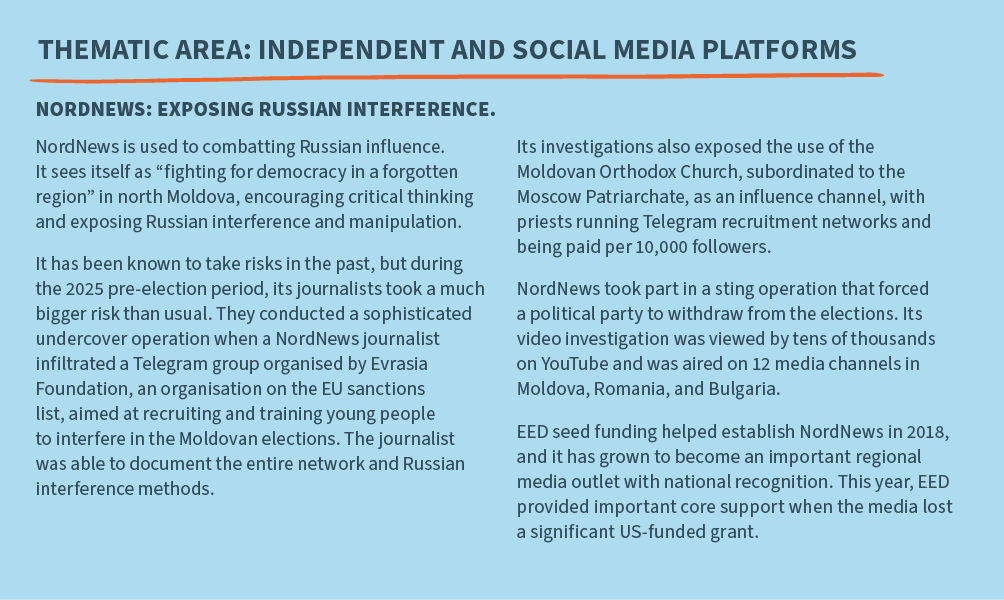
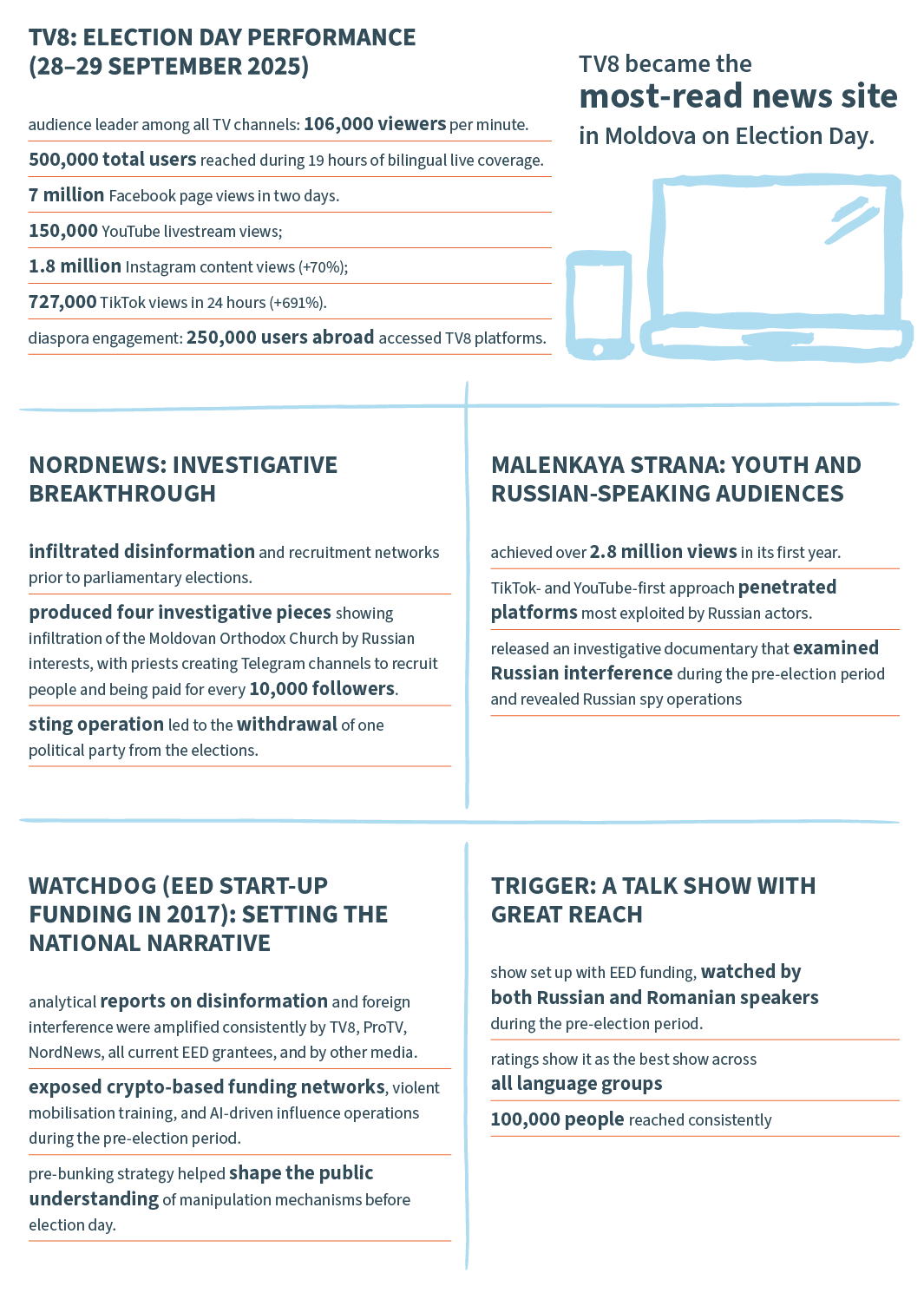
Supported independent outlets revealed influence operations, traced financing networks, and documented attempts to manipulate public opinion. NordNews, for example, infiltrated disinformation and recruitment networks ahead of the parliamentary elections, uncovering Russian interference, financing mechanisms, and coordination with local operatives.
WatchDog’s disinformation and foreign-interference analysis became a national reference point. Its reports exposed cryptobased funding streams, violent mobilisation training, and AI-driven influence operations, and its pre-bunking approach helped shape public understanding of manipulation techniques before Election Day. The analysis was consistently amplified by major broadcasters and online outlets, embedding early warning signals into the mainstream information space.
Regional and Russian-language platforms ensured that communities historically dominated by Russian media had access to credible information. Malenkaya Strana, with over 2.8 million views, operated directly on the platforms most exploited by influence actors, and reduced the traction of destabilising content among youth audiences.

Episodes of Tulbure’s Trigger and EvroIntegratsia v fokuse, produced in Russian but widely followed by Romanian speakers as well, became shared reference points across linguistic divides, with Trigger consistently reaching 100,000 viewers and ranking as the top-rated political talk show across language groups.
TV8 provided an important information space for the country, delivering continuous, bilingual election coverage that reached millions online and became a main reference point for citizens following the vote.
The continuous flow of investigations, pre-bunking analysis and high-reach, bilingual reporting triggered concrete institutional and civic responses. Authorities reacted to exposed financing schemes and interference patterns, while civil society organisations and diaspora networks used media outputs to sustain voter awareness, counter manipulation narratives, and mobilise participation.
Together, these dynamics created a functional early-warning and public-information system that supported Moldova’s democratic process during an unprecedented hybrid threat.
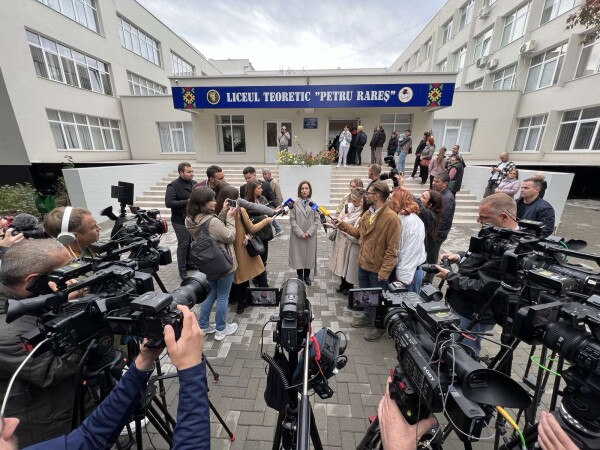
© Mihai Țurcan
Moldova sits at a strategic fault line in Europe’s neighbourhood. The resilience of its democratic process in 2025 has direct implications for EU security and enlargement policy. The ability of independent media to withstand hybrid pressure, maintain public trust and provide transparent coverage was particularly important for Moldova during this vital pre-election period.
The developments in Moldova show how targeted, flexible support to local media and analytical actors – delivered early and sustained over time – can strengthen the foundations of national resilience. In an era of hybrid competition, Moldova’s experience illustrates that democratic stability depends not just on state institutions but also on the information and civil society ecosystems that sustain them.
This article includes an AI-generated audio version to offer readers an additional way to engage with the content. As the narration is produced using automated voice technology, occasional inaccuracies may occur.