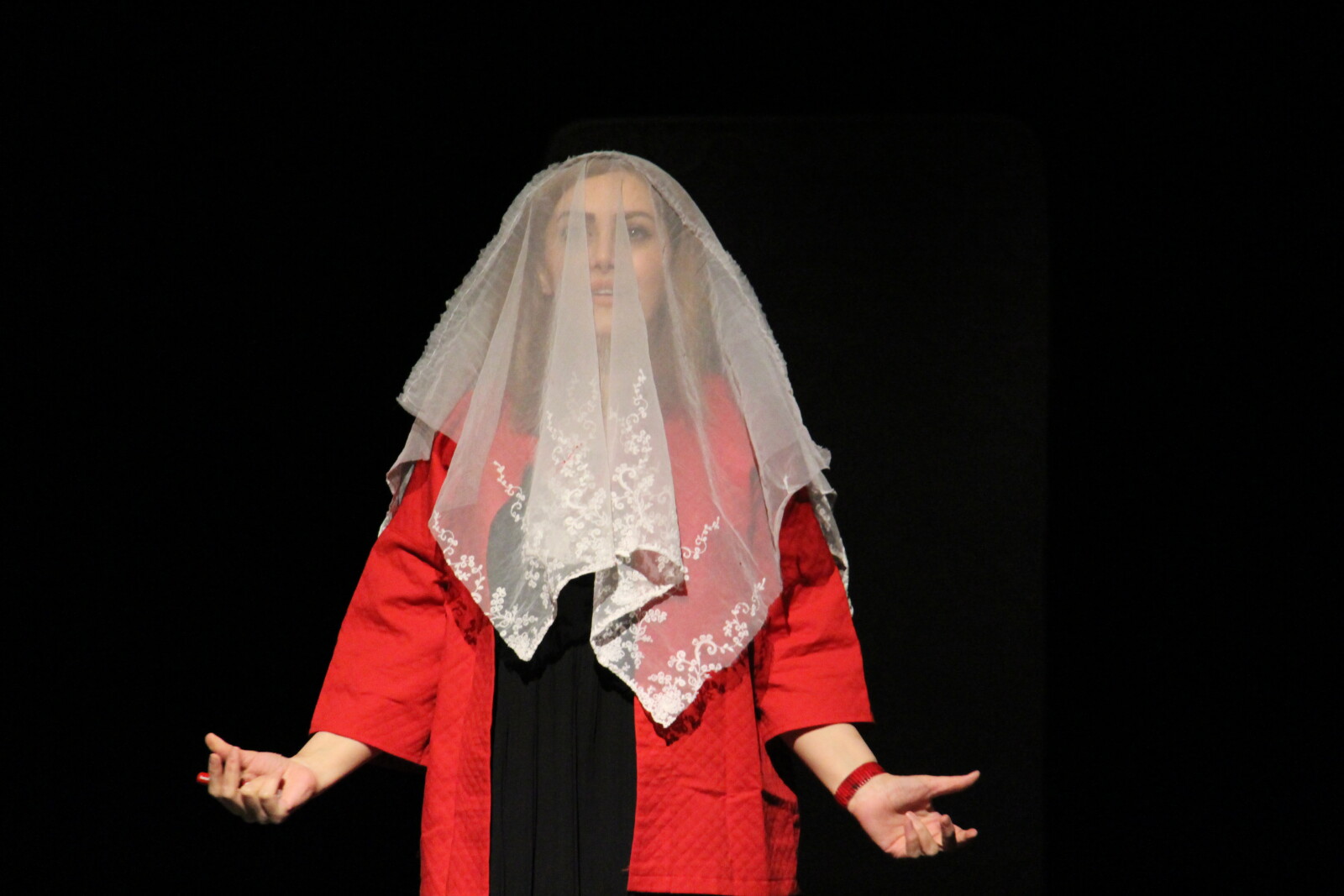
Cover Photo: © Mordem Sanat
Supported by EED, Kurdish cultural spaces endure, and have become an essential part of the democratic infrastructure
In Turkey, questions of language, identity and cultural expression are not peripheral to democracy; they are central to it. For decades, policies designed to suppress Kurdish cultural and political life shaped the architecture of the state’s security doctrine. These methods – grounded in broad terrorism laws, criminalisation, and the seizure of elected municipalities – later became the template for repressing journalists, opposition parties, student movements and civil society at large.
In this environment, the cultural spaces, theatres, language institutes and community centres supported by EED have emerged as essential democratic infrastructure. More than buildings, they function as places where civic, intellectual, artistic and political expression can occur and where Kurdish cultural life, in all its linguistic and artistic forms, continues despite ongoing pressures.
WHERE CULTURE AND DEMOCRACY INTERSECT
Turkey’s democratic decline is often described through unfair elections, media capture or judicial erosion. But in the southeast, the story begins earlier and runs deeper. For decades, the repression of Kurdish identity – its language, cultural institutions, elected representatives and public spaces – formed the core of the state’s approach to dissent.
Anti-terror legislation became a flexible instrument used not only against armed groups but also against mayors, writers, teachers, students and artists.
This model reached its peak between 2016 and 2020, when more than 90 elected Kurdish mayors were removed and replaced with state-appointed trustees. Municipal theatres were shuttered, libraries were emptied, Kurdish-language institutes closed, cultural centres dismantled. Entire urban cultural ecosystems were threatened.
Experts and EED partners consistently describe these actions as a turning point: the techniques refined against the Kurdish political movement – criminalisation, asset seizure, cultural erasure – became the operating logic for suppressing broader opposition. What began as a targeted assault evolved into a generalised pattern of authoritarian governance.
The southeast has also experienced extreme social vulnerability: mass displacement, high unemployment, limited access to public services and the lingering effects of conflict. When the Covid-19 pandemic and the 2023 earthquake struck, they further constricted civic life, eroding the few remaining public spaces where communities could gather.
PROTECTING CULTURAL AND CIVIC SPACE IN A REPRESSIVE ENVIRONMENT
Amid this shrinking landscape, independent cultural and linguistic spaces became crucial for maintaining a pluralistic public sphere. Several partners emphasise that EED was one of the very few democracy donors willing to support these actors – not as “arts projects”, but as pillars of civic expression.
Over the years, EED supported around 25 cultural initiatives, including theatres, cultural centres, literature collectives and publishing houses, Zazaki and Kurmanji language media and institutes, women-led organisations and youth initiatives across the southeast. Much of this support began during periods when trustees had seized municipal assets, leaving local cultural life without institutional backing.
A significant share of EED’s portfolio in the region consists of arts and culture initiatives, which are seen by experts as key to democratic support. As one commentator put it: “Supporting the endurance and sustainability of art organisations in the region is not only a necessity but also a responsibility for all actors in Turkey or outside Turkey who want to support democratic culture.”
One partner put it simply: “Culture is our only safe way to speak. EED understood that.”
This support kept venues open, allowed artists to perform, enabled language teaching and ensured that writers, translators, theatre groups, filmmakers and musicians had places to work when state institutions had removed everything else. In several cases, these spaces became the only locations where Kurdish cultural production continued after municipal closures.
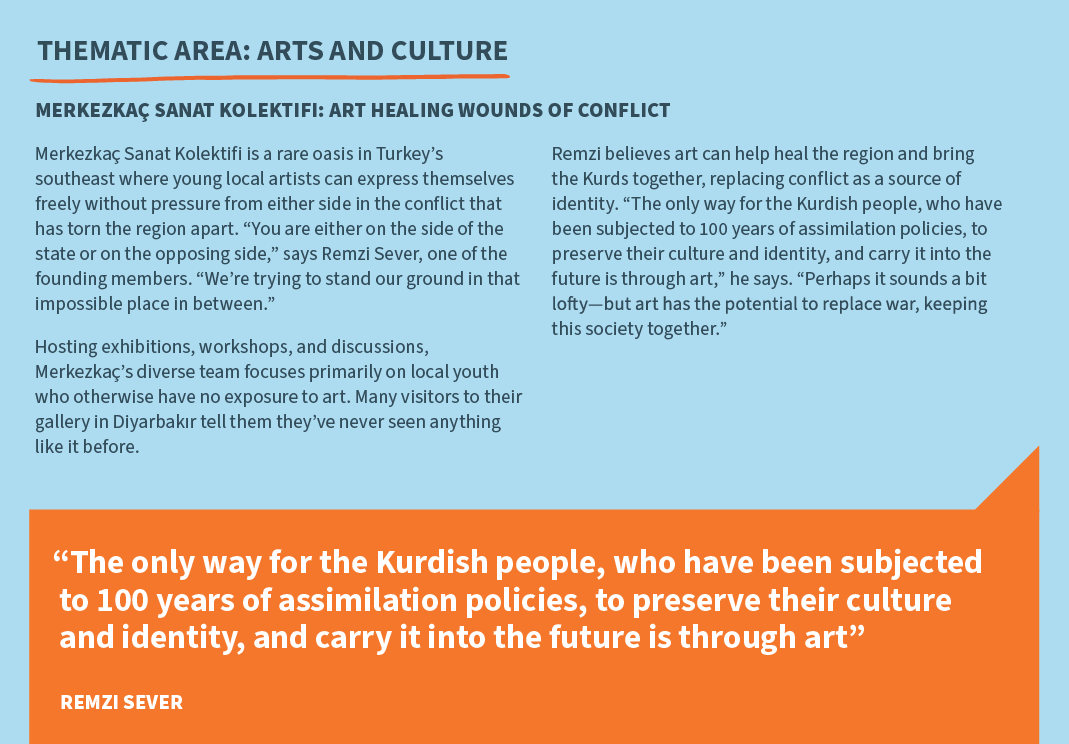
CULTURAL INFRASTRUCTURE AS DEMOCRATIC INFRASTRUCTURE
EED-supported centres became safe ground in a political environment where almost every institution was polarised. They hosted theatre groups, language courses, plays, human rights discussions, film screenings and women’s gatherings – often simultaneously. Many became the preferred meeting points for civil society actors and international visitors, simply because there were no alternative safe venues.
Civic spaces serve as catalysts for inclusive civic activism, supporting multiple civil society actors, and provide spaces where communities can speak freely. As one expert on the region put it, “When you have a space you have autonomy. You have freedom. You can make new collaborations, network, organise, invent or invite your audience and possible partners.”
These venues became places where different groups could network. In one city, a single cultural centre hosted more than 30 theatre groups over two years. Another renovated its performance hall and reopened with sold-out shows, attracting audiences who had lost access to cultural life for nearly a decade. Another shared the space with media actors and national and international actors.
Cultural spaces provide a place for artists to perform after public spaces were shut down. They are spaces that provide “breathing space for those who are left and have lost their space”, as another commentator put it.
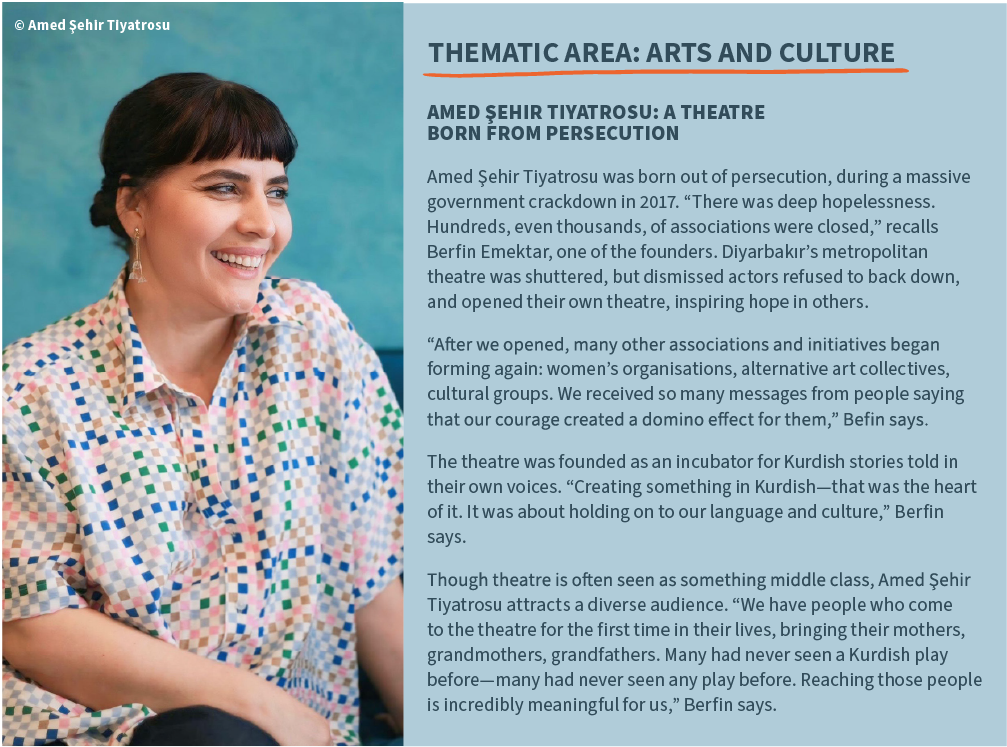
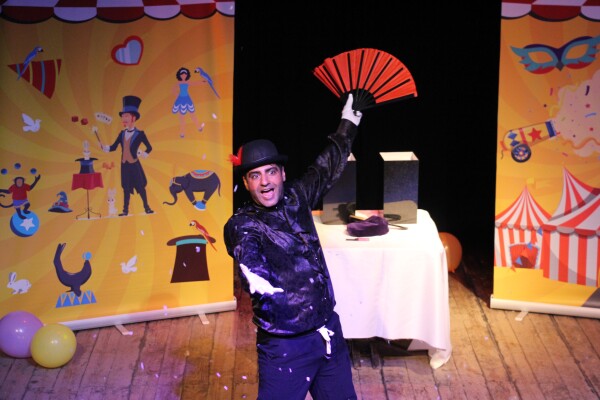
© Mordem Sanat Derneği
Several partners have expanded their collaborations beyond Turkey’s borders, connecting Kurdish artists, writers and theatre groups from Iraq, Iran and the diaspora. This cross-regional exchange preserved artistic traditions and created professional pathways that local restrictions had curtailed.
These spaces also became anchors for crisis response in the region. During the post-Covid period, when spaces reopened, they saw sharp increases in attendance, demonstrating sustained community demand for these spaces. Following the 2023 earthquake, cultural centres supported hundreds of displaced families, coordinating volunteers and distributing essential goods.
In Turkey, language rights remain one of the most politically sensitive dimensions of Kurdish identity. EED-supported actors maintained and expanded access to resources for Kurmanji and Zazaki language teaching, a language classified as “vulnerable” by UNESCO in 2009, at a time when municipal courses had been shut down.
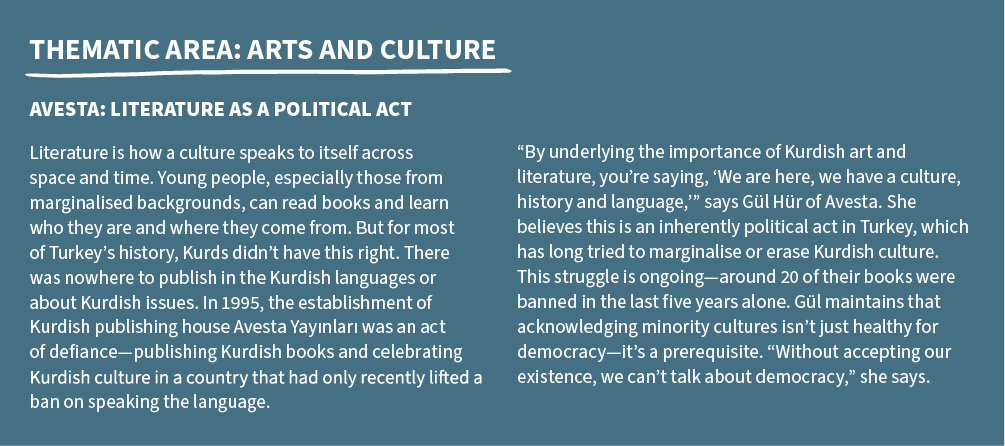
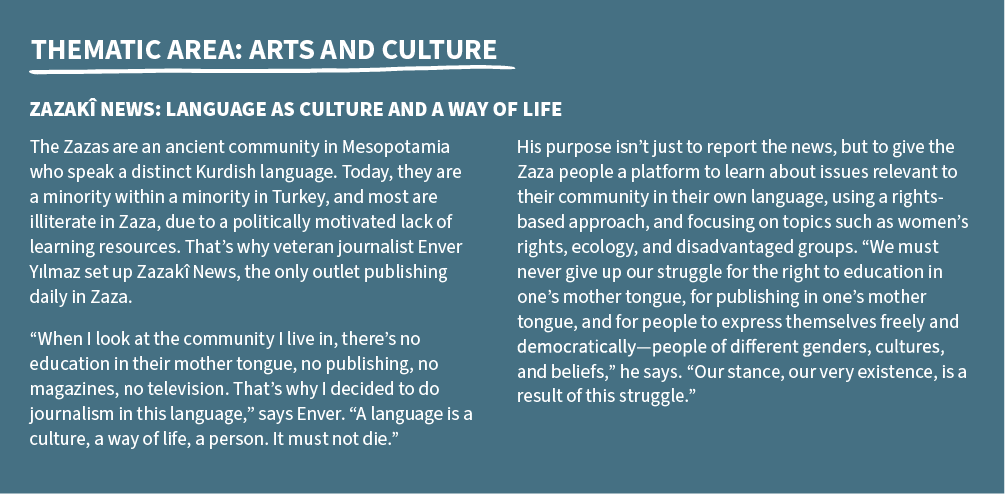
Several partners developed Kurdish-language curricula, terminology guides and grammar materials; others produced children’s books, dictionaries and cultural magazines. Theatres did multi-day festivals in Kurdish, and they brought plays to 87 villages. One organisation created an etymological commission that documented vocabulary from three dialects, publishing books now used by students, teachers and academics.
A partner described this as democratic work: “If we want Turkey to be a democratic country, we need to come to a resolution of the Kurdish issue and that will come with the Kurdish language development and integration into the life.”
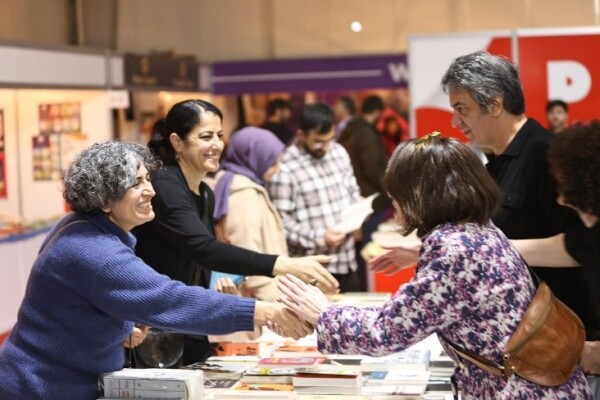
© Avesta
Turkey’s democratic trajectory cannot be understood without recognising the centrality of culture, language and identity to political rights. The suppression of Kurdish cultural life has historically shaped national governance practices – and continues to influence how dissent, journalism, opposition and civil society are treated.
The resilience of the cultural and linguistic ecosystem in the southeast therefore has implications far beyond the arts. It represents a form of democratic continuity in an environment where formal political avenues are restricted. The survival of these spaces ensures that pluralism, cultural rights and civic expression remain visible and active components of Turkey’s social fabric.
For the EU, supporting these actors strengthens the conditions for long-term democratisation, social cohesion and rights-based governance. Their work demonstrates that cultural freedom is not an accessory to democratic life – it is one of its foundations. The recognition of cultural rights is a core demand of Turkey’s Kurdish population and critical to the ongoing peace process. Supporting these rights lays essential groundwork for lasting resolution.
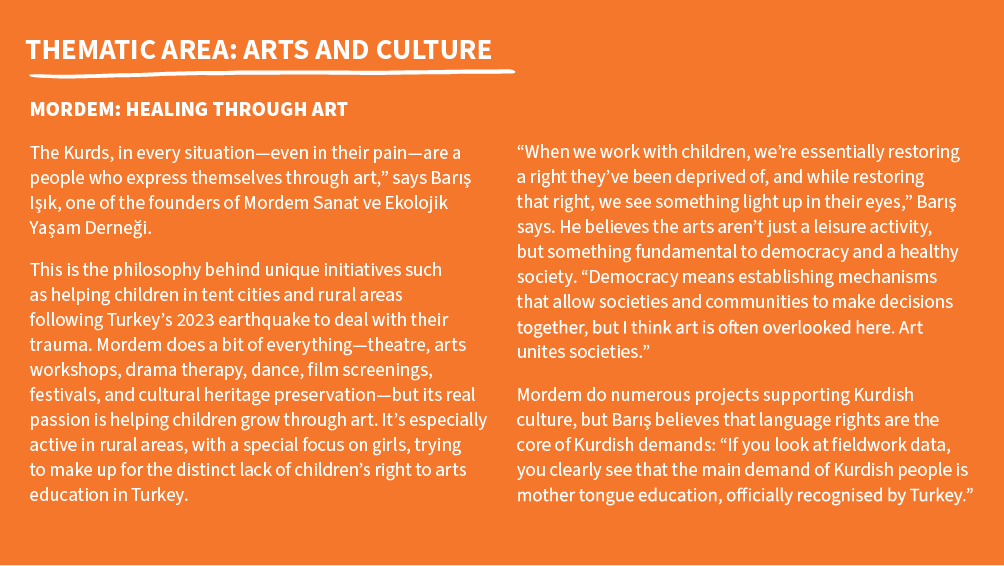
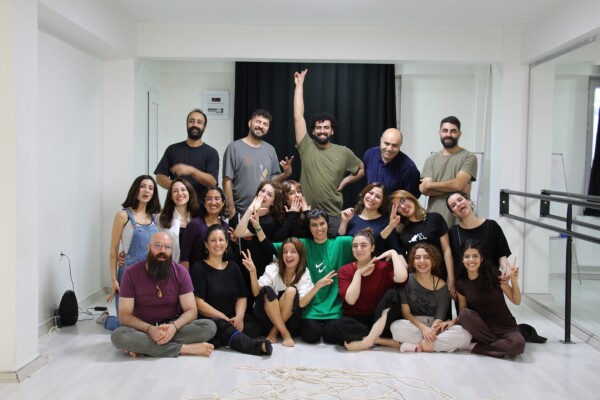
© Sanat Derneği
This article includes an AI-generated audio version to offer readers an additional way to engage with the content. As the narration is produced using automated voice technology, occasional inaccuracies may occur.