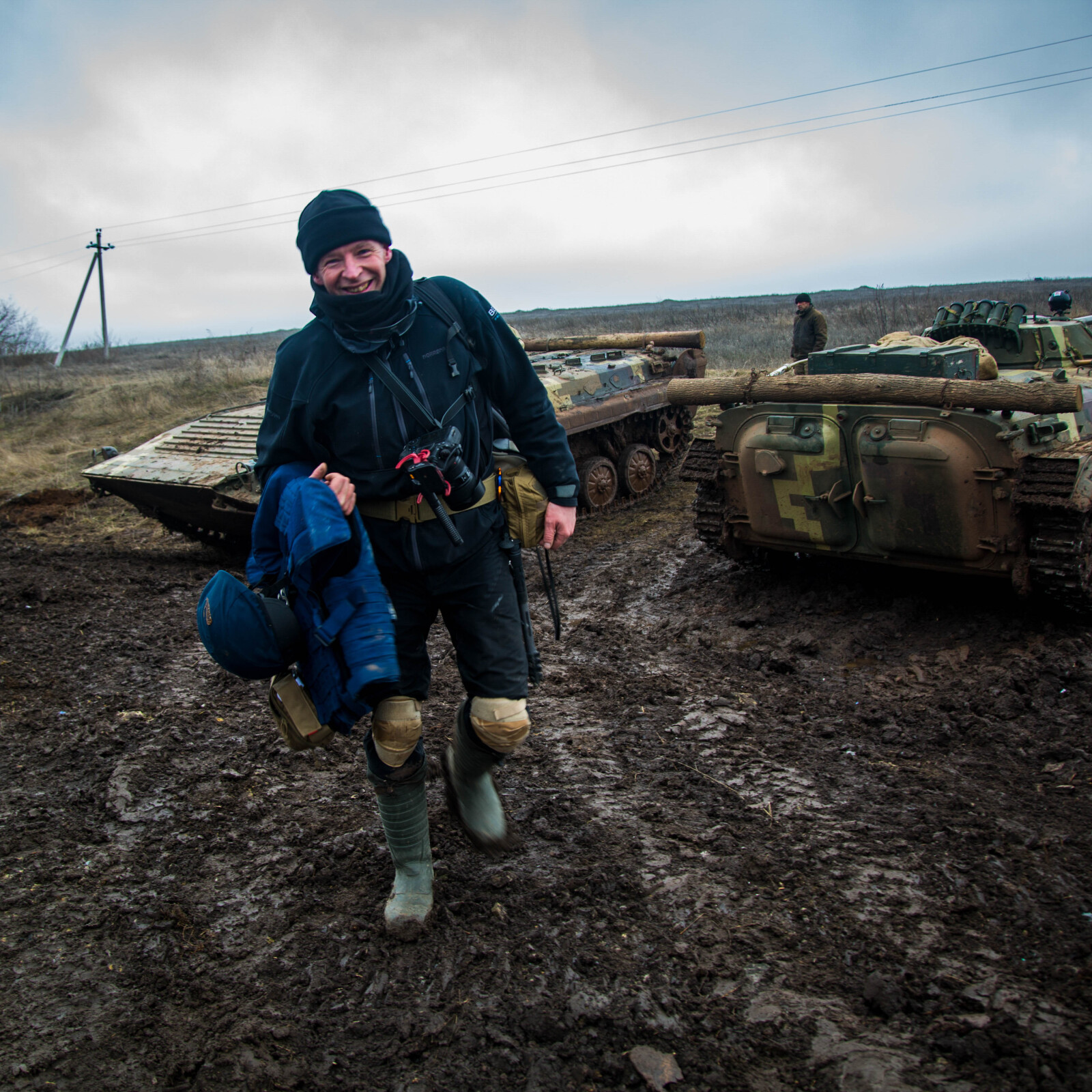
Cover Photo: © Frontliner
EED enables the wartime revitalisation of Ukraine’s media, watchdogs, and civic sector
Russia’s full-scale war has reshaped Ukraine’s political landscape. Under martial law, elections are suspended, civil liberties temporarily restricted, and the state is more centralised. In this environment, democracy cannot be understood through its formal institutions; it lives on through practice. The continuation of independent media, watchdog oversight, civic organisation, youth leadership, veteran self-advocacy and rights-based work all form Ukraine’s democratic backbone during war.
Across nearly four years of war, these practices have not collapsed. They adapted, reorganised, decentralised, and in many cases grew. This continuity was neither guaranteed nor accidental. EED supported pre-war ecosystem building and has provided rapid, flexible emergency assistance throughout the war, enabling independent journalists, civic actors, youth initiatives, watchdogs and veteran groups to remain operational when they were displaced, under fire, or at risk of dissolving.
This survival has created something rare in wartime: early signs of revitalisation and innovation. New organisations have emerged, new networks have formed, and democratic energy is regenerating. EED’s role has been to ensure there is democratic infrastructure to rebuild from, when wartime restrictions eventually lift.
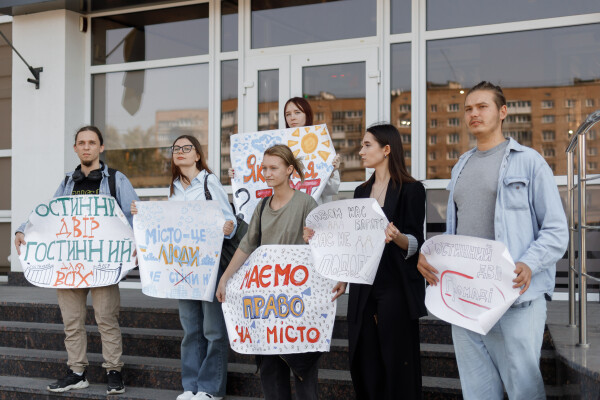
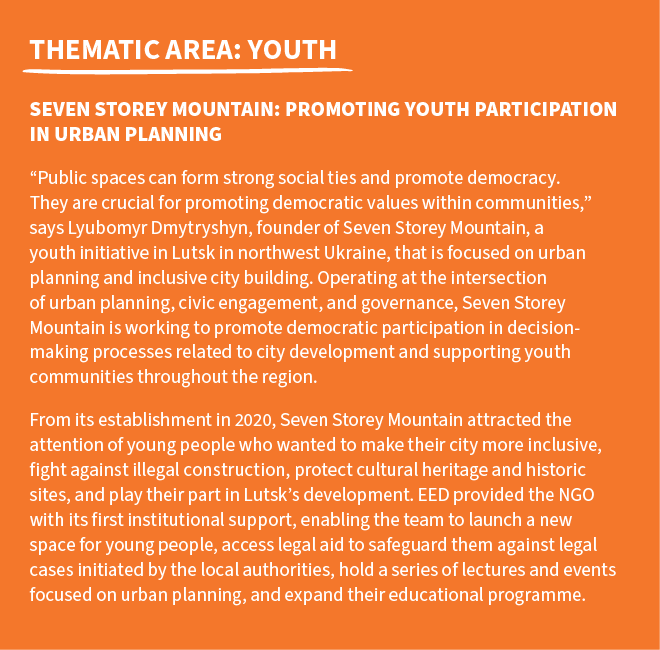
© Sevem Storey Mountain
PRACTISING DEMOCRACY WHEN FORMAL DEMOCRACY IS SUSPENDED
Wartime Ukraine is defined by overlapping crises: mass displacement (estimated at 10.4 million people), economic contraction, infrastructure attacks, and constantly escalating security threats. These pressures forced the state to adopt measures incompatible with normal democratic operations: postponed elections, limited public protests, and highly centralised governance.
The war also reshaped civic realities. Forty percent of media outlets were damaged, destroyed, or displaced; 28 percent of regional media suspended operations entirely. Local civil society organisations lost staff to mobilisation, evacuation, and trauma. Youth initiatives lost safe spaces; veterans returned with urgent reintegration needs; marginalised groups, including LGBTQI+ communities, faced heightened risk.
Yet public expectations for participation did not disappear. Surveys show that up to 80 percent of Ukrainians engaged in some form of volunteering or civic action. This created a paradox: civic demand expanded while civic infrastructure shrank. The question was whether Ukrainian democracy – not as a formal system, but as a lived practice – could survive this mismatch.
DUAL-PHASE SUPPORT: ECOSYSTEM-BUILDING AND EMERGENCY STABILISATION
According to the assessment of the 2025 external evaluation, EED’s work supporting start-up media, regional civic groups, watchdogs, youth organisations, LGBTQI+ actors and new community initiatives, often at early stages when few donors were able to support them, was important in maintaining a pluralistic public sphere, fostering civic participation and collaboration, and enabling watchdog and media actors.
Sectors supported by EED included:
This diversified, decentralised network became the architecture of Ukraine’s democratic resilience in wartime.
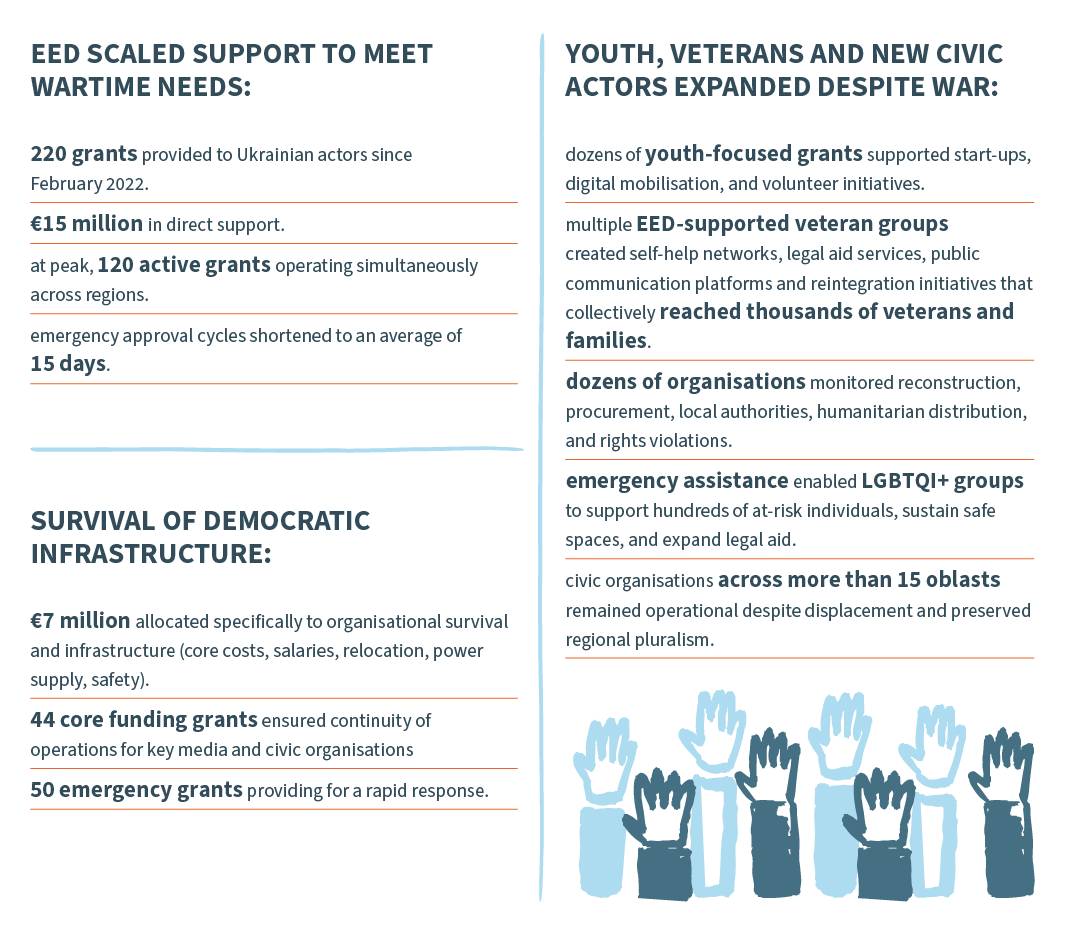
After 24 February 2022, EED shifted to rapid-response funding cycles averaging 15 days, one of the fastest among democracy donors. Grants covered evacuation, relocation, core salaries, backup power sources, editorial safety, psychological care, digital security, and the rebuilding of offices and studios. EED contacted partners proactively, enabling dozens of organisations to continue working when operations would otherwise have halted. Over the first 60 days of the war, EED issued an average of one grant a day.
EED provided emergency support for independent media and watchdogs, flexible grants for local democracy actors, networking and coaching to cultivate new voices, with an emphasis on youth-facing media, and targeted support to marginalised groups including veterans and LGBTQI+ at critical moments. EED rapidly rolled out the Centre for Ukrainian Activists in Przemysl, Poland, close to Ukraine’s border, to provide a physical space and psychosocial support to activists.
During the US funding freeze in 2025, EED again became one of the few democracy assistance actors capable of stabilising media and civic organisations suddenly facing shortfalls.
Across all phases, partners describe EED’s support as decisive: “We survived the first year because EED moved when others couldn’t.” As another put it: “Without the core support, the organisation simply would not exist today.”
CONTINUITY, ADAPTATION, AND WARTIME REVITALISATION
Although wartime constraints limit classic oversight, watchdog groups continue to adapt by documenting reconstruction risks, monitoring local authorities, publishing analyses of procurement and humanitarian distribution, and maintaining transparency where possible. This sustained public scrutiny and prevented the erosion of accountability norms.
More than 40 percent of media faced physical damage, displacement or shutdown risk and 28 percent suspended their operations at some stage during the full-scale war, making emergency and institutional support vital. EED supported outlets rebuilt operations, restored broadcasting, moved to safer regions, and continued reporting even during blackouts. Local media in front-line regions preserved vital information flows for civilians.
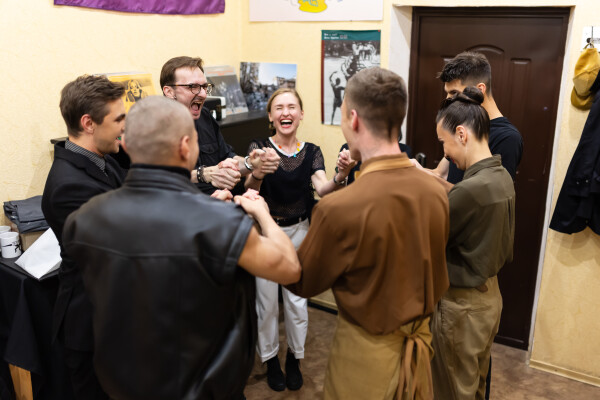
© Oleksandr Osipov
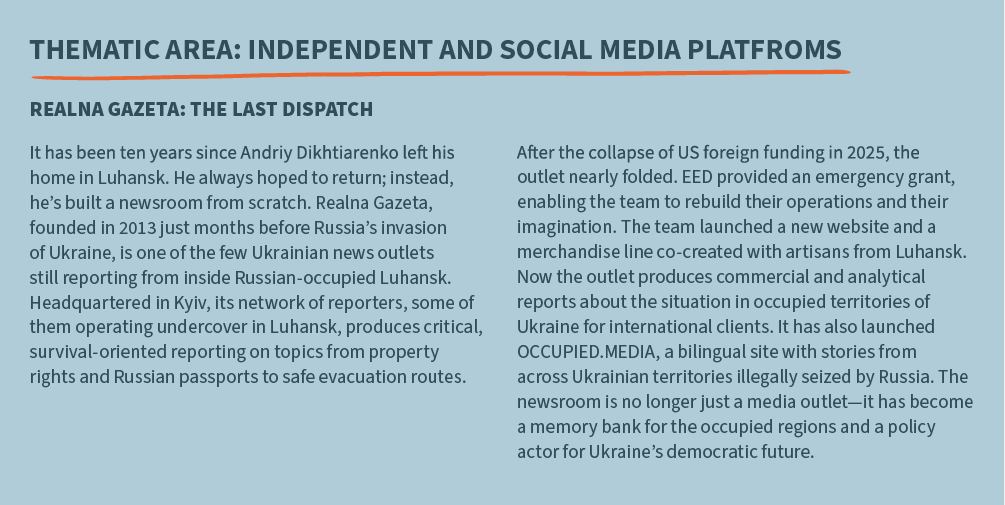
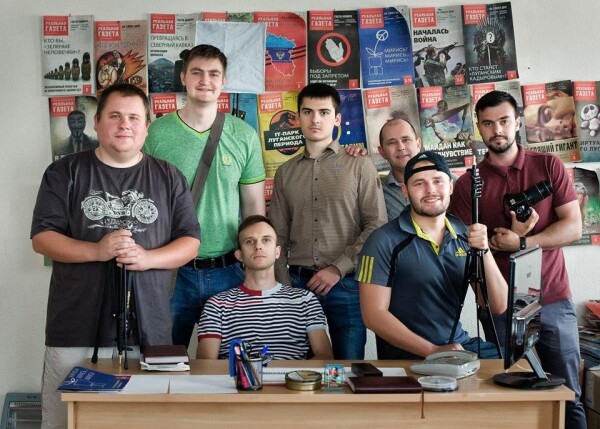
© Realna Gazeta
Civil society organisations that lost offices, equipment or staff reconstituted themselves in new locations. Many transformed their mandates: from community-building to humanitarian aid, from rights advocacy to psychosocial support, from youth training to volunteer coordination. Their survival preserved pluralism at the local level.
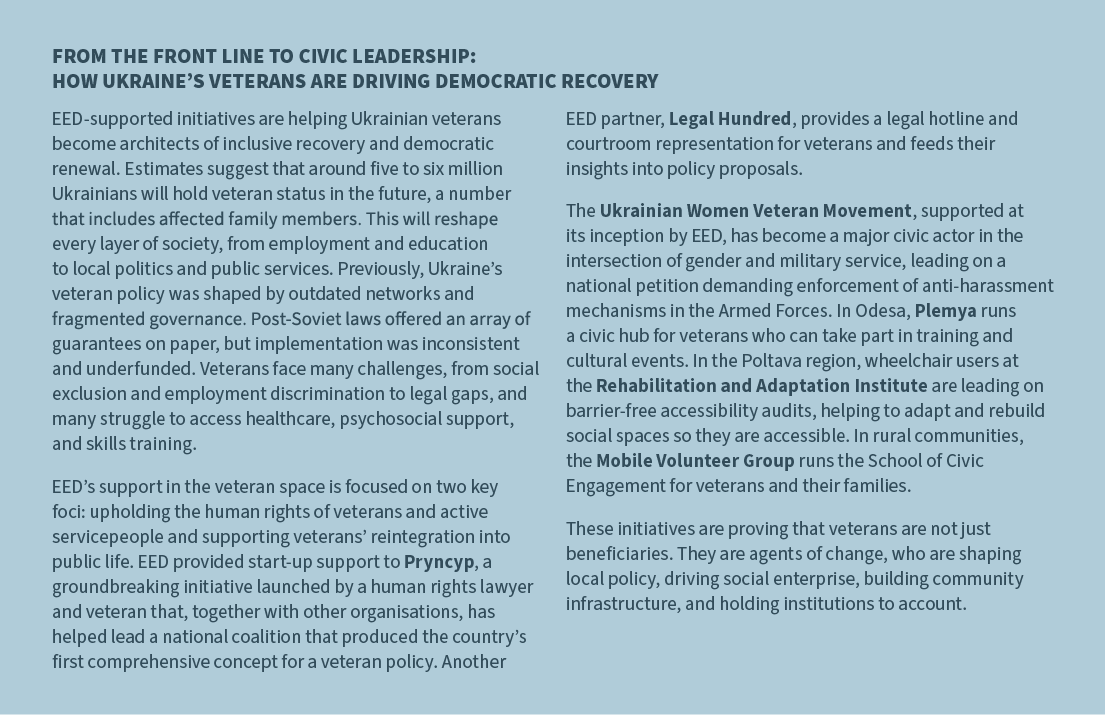
One of the strongest findings of the independent evaluators is that EED helped generate a new generation of actors: youth media, new watchdog initiatives, fresh civic movements, innovative regional organisations, and veteran groups building democratic participation from the ground up. This is revitalisation in wartime – the emergence of new democratic energy even amid destruction.
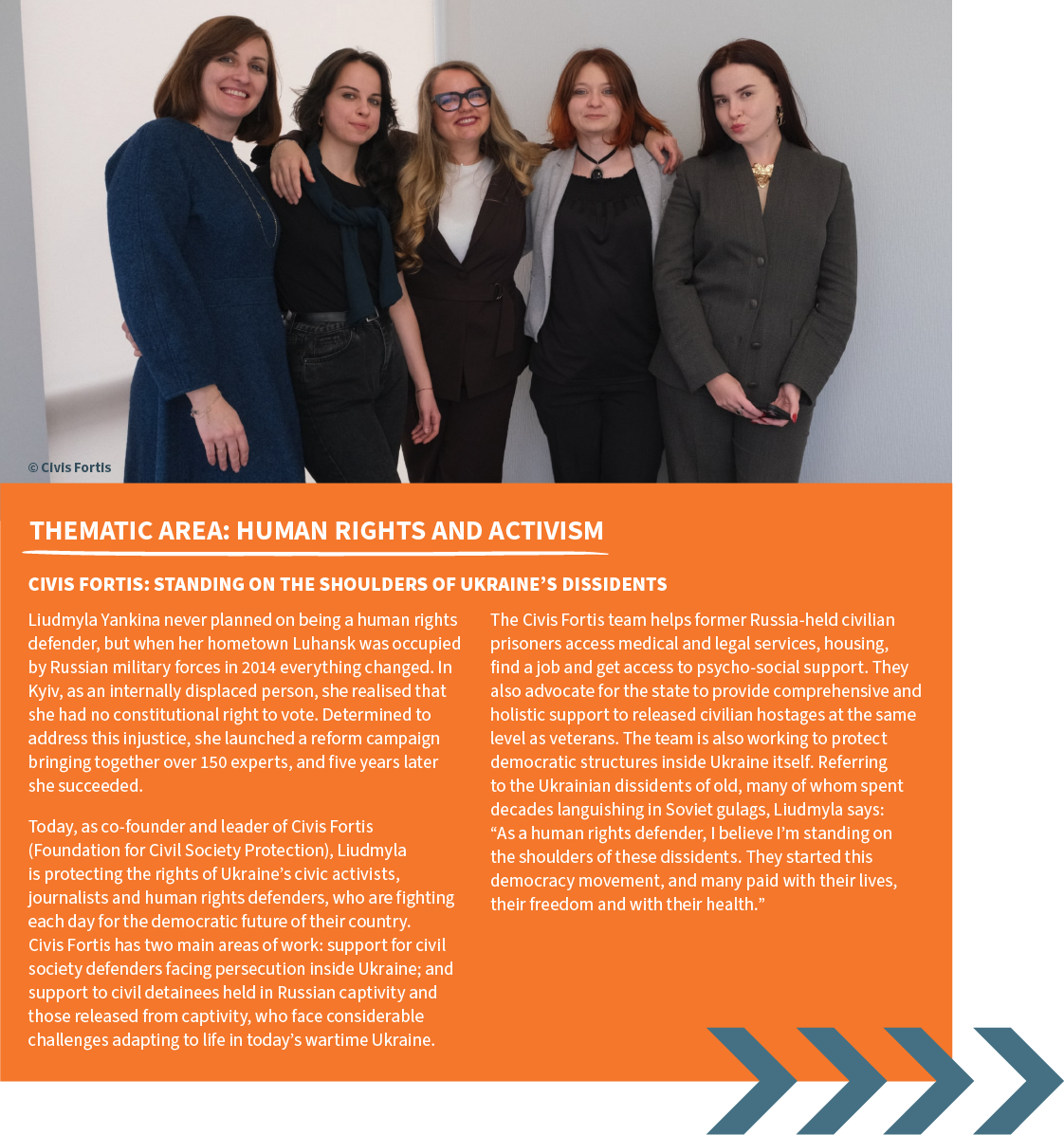
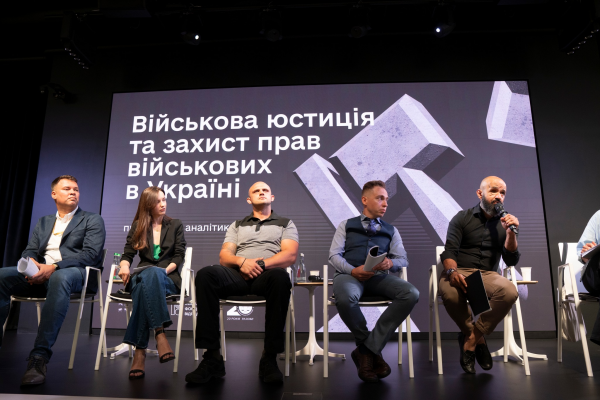
@Pryncyp
Wartime necessity pushed actors into collaboration: civil society, independent media, humanitarian groups, businesses and local authorities formed new partnerships. EED-supported organisations were often conveners or early participants in these networks.
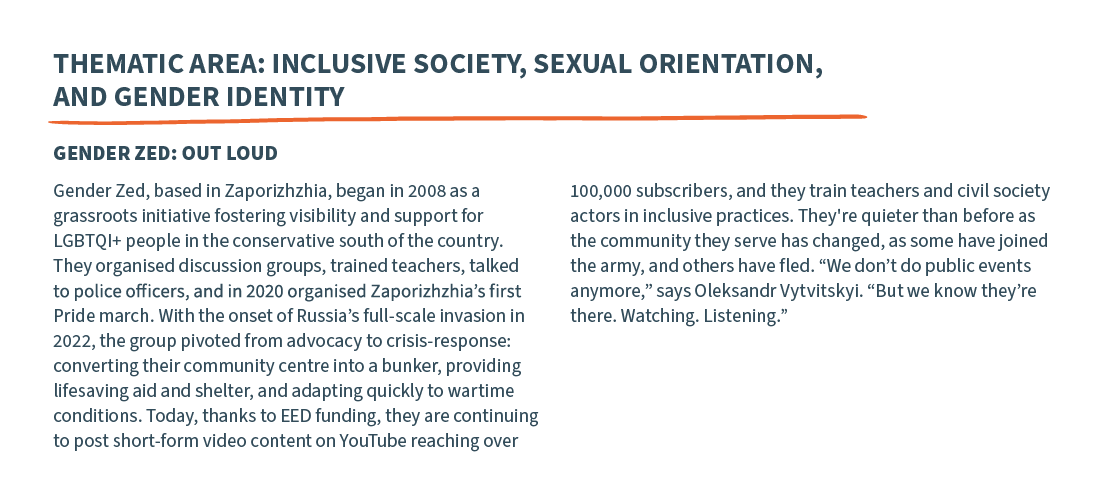
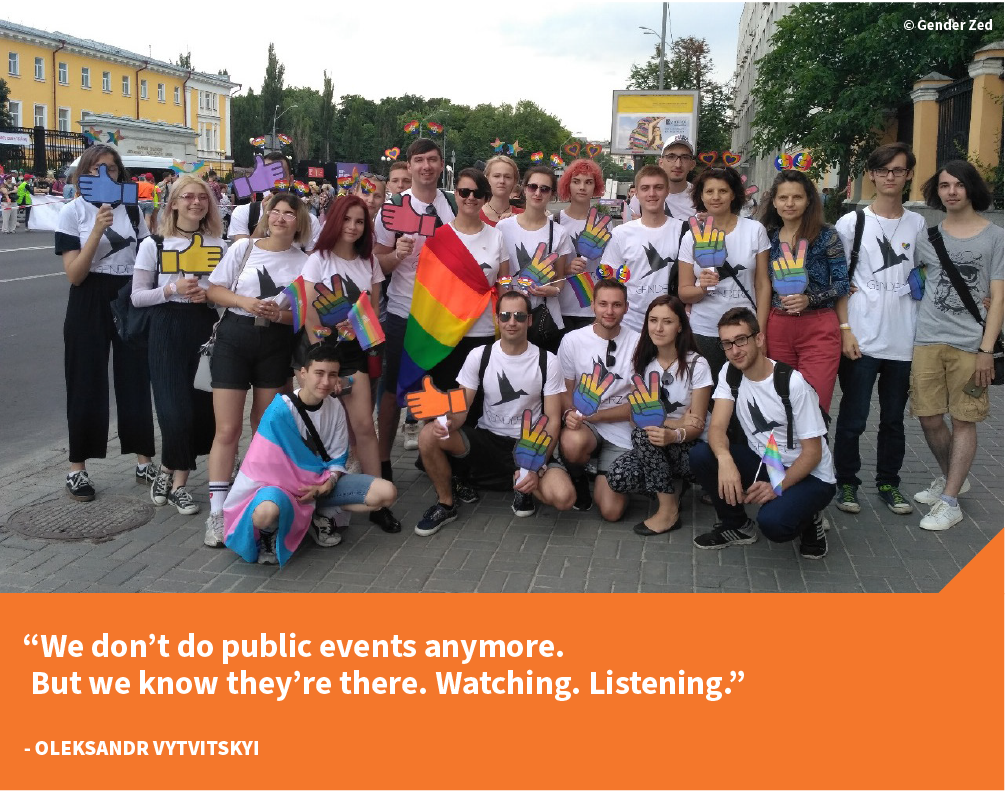
LGBTQI+ organisations maintained their visibility and community support despite increased risks, offering safe spaces, legal aid and emergency assistance. Their continuation ensured that equality norms did not disappear from Ukraine’s civic landscape during the war.
Ukraine is fighting a defensive war while maintaining the social conditions on which a democratic future depends. The survival of independent media, watchdogs, civic organisations, youth initiatives and veteran groups under wartime stress is not simply resilience. It is the foundation of eventual recovery and revitalisation.
EED’s role has been to ensure that when democracy’s formal mechanisms restart, elections return, decentralisation resumes and civic freedoms fully reopen, there will be something to revitalise. The infrastructure of democratic life is being preserved and renewed now, not delayed until post-conflict reconstruction.
For Europe, this is strategic: a Ukraine that maintains its pluralism during wartime is a Ukraine that can return to peacetime as a functioning democratic partner. Supporting that continuity today dramatically reduces the democratic costs of the war tomorrow.
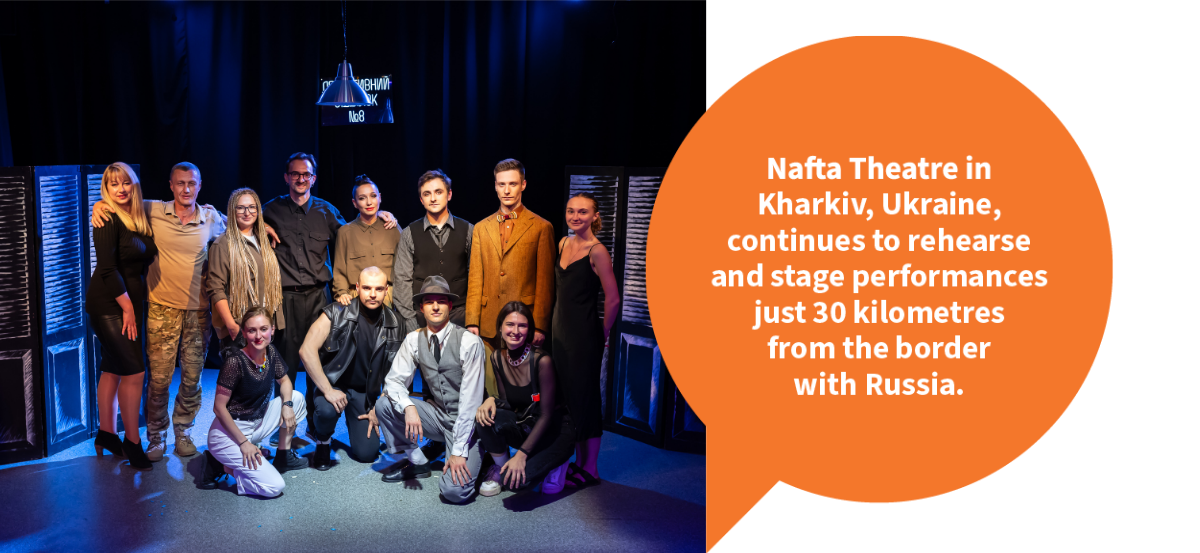 © Oleksandr Osipov
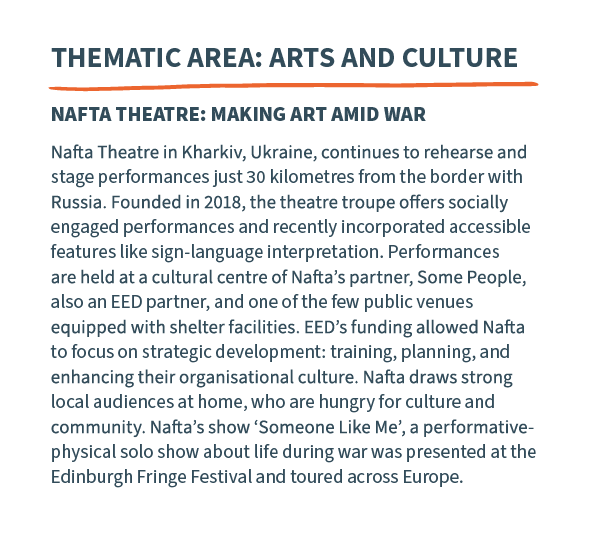
This article includes an AI-generated audio version to offer readers an additional way to engage with the content. As the narration is produced using automated voice technology, occasional inaccuracies may occur.