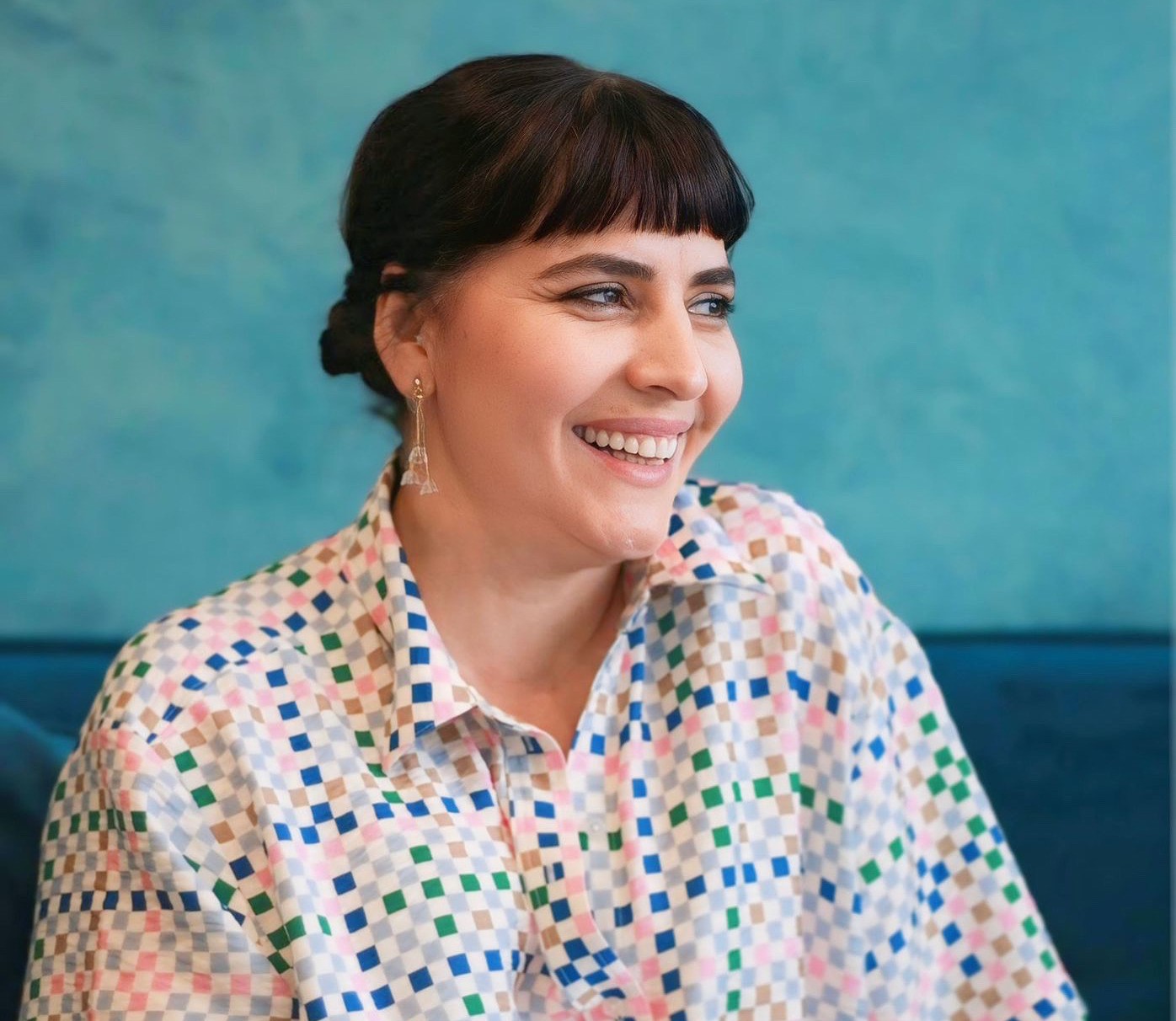
Kurdish theatre as an act of solidarity and resistance in Turkey
Berfin Emektar has always expressed her identity and defied Turkish assimilation by performing on stage in Kurdish. “It was about holding on to our language and culture,” she says.
Growing up in a Kurdish migrant family in the Turkish-majority city of Izmir on Turkey’s west coast, Berfin attended a local Kurdish cultural centre to learn her family’s native tongue, eventually joining the centre’s theatre troupe.
Later, she moved to the Kurdish-majority city of Diyarbakır in Turkey’s southeast and joined the local municipal theatre. In 2003, the theatre started staging Kurdish-language plays for the first time, a momentous milestone and huge step from the days when Kurdish plays were performed secretly in private homes.
For Yavuz Akkuzu, another thespian at the theatre who’d only ever acted in Turkish before, performing in his mother tongue set free his true self on stage. “When I performed in Turkish, I felt like it didn't quite sit right with my body or voice. But when I spoke in my own language, my body, voice and feelings all intertwined, and I reached a higher artistic level and better connection with the audience,” he says.
But it all came crashing down after the government abandoned a peace process with the Kurdish movement in 2015. Dozens of elected mayors from the pro-Kurdish party were replaced with government trustees who shut down many civil society and arts organizations that promoted Kurdish identity. The Diyarbakır municipal theatre, long targeted by various governments, was finally shuttered for good in 2017.
“There was a deep hopelessness,” recalls Berfin. But she, Yavuz and other Kurdish actors who lost their jobs refused to back down — they opened their own private theatre, the Amed Şehir Tiyatrosu. This inspired others to do the same, in defiance of state oppression.
Women’s organisations, alternative art collectives, music schools and other cultural spaces followed Amed Şehir Tiyatrosu’s example. “We received so many messages from people saying that our courage created a domino effect for them because they saw that we dared to start again from nothing,” Berfin says.
Following an expansion in 2020 with the financial support of EED, the Amed Şehir Tiyatrosu now proudly stands in a newly developed area of Diyarbakır, boasting a 250-seat theatre hall, and serving as a general cultural centre. The space is home to a team of 15 full-time, professional actors, making it Turkey's largest private theatre company without state funding, and the only one that runs its own annual theatre festival, going on eight years now.
Berfin is grateful for EED’s backing, especially after the pandemic hit them hard. “EED’s support came like a lifeline. It allowed us to complete everything, open our venue, and emerge from the pandemic period,” she says.
The theatre is one of just ten Kurdish troupes in Turkey, a tiny number for a population of 20 million Kurds. Yavuz compares this with Berlin, where he spent a year, which has upwards of 500 theatre groups. “That's why people creating Kurdish art take pride in this place, because the public feels an absence of the arts. We are trying to fill this gap,” he says.
Promoting Kurdish culture and identity is at the heart of Amed Şehir Tiyatrosu’s mission. Showing most of their plays in Kurdish is an act of solidarity and resistance in a country where the Kurdish language and culture are silenced and assimilation is national policy. “By performing in Kurdish, telling Kurdish stories, and creating art through our own cultural lens, this is how we support Kurdish rights,” Berfin says.
Amed Şehir Tiyatrosu is also proud to host a diverse audience beyond a narrow cultural elite. “We have regular, dedicated theatregoers, but we also have people coming to a theatre for the first time in their lives, bringing their mothers, grandmothers and grandfathers,” Berfin says. “Many had never seen a Kurdish play before; many had never seen any play before! Reaching those people is incredibly meaningful for us.”
Many of the productions are aimed at children, so they can see what their language is capable of take pride in it. “We want children to encounter Kurdish in public space — not only as their grandmother’s language at home, but as a language they see on stage,” says Berfin.
Women are another crucial component of the theatre, representing over half the audience — an incredible accomplishment in a conservative society where men dominate public spaces. “Women going out at night, entering the public space, going to the theatre — this is very meaningful in this region,” Berfin says.
For her, being an artist carries a responsibility to stand up for all marginalised groups whose voices aren't often heard, and that’s what Amed Şehir Tiyatrosu strives for. “Culture and art can open space for the Other. This isn’t only about Kurds; it’s about everyone who is different and marginalised. We see art as a place that opens doors, and in that sense it has a very deep connection with democracy.”
This article reflects the views of the grantees featured and does not necessarily represent the official opinion of EED.