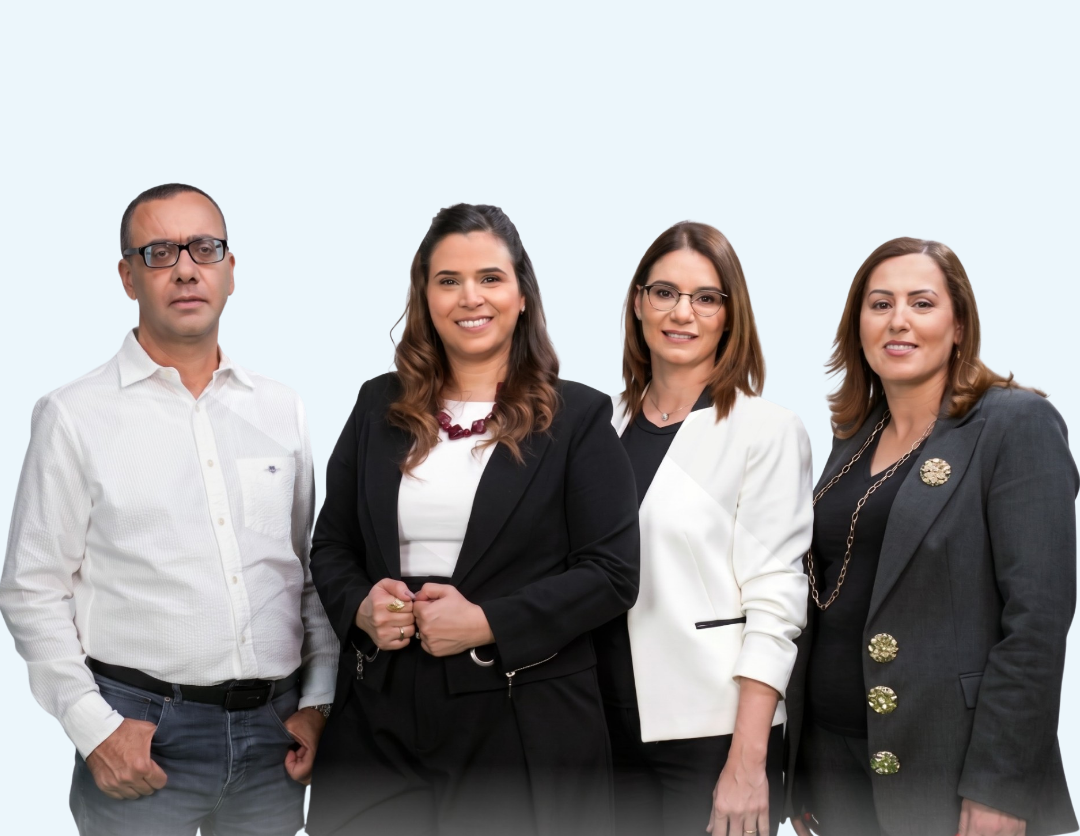
A Palestinian representative body in Israel is providing educators, parents, and communities with the tools they need to keep teaching, thinking, and speaking
“The olive tree is our paradigm,” says Dr Samah Elkhatib-Ayoub, General Director of the Follow Up Committee on Arab Education (FUCAE). “The roots are our collective historical identity. The tree’s trunk is our educational leadership. And the fruit – the olives – are our children. But we cannot bear fruit without roots.”
In a land where the battle over olive trees is as symbolic as that over education, it is a fitting image. For the Palestinian minority in Israel, education has always been an unequal battleground over identity, history, and who gets to shape the minds of the next generation. The educational curriculum is controlled by the Israeli authorities, and while there is an Arab department within the Ministry of Education, it has no real responsibility or budget.
FUCAE has spent over four decades working to ensure that Palestinians have a voice in that fight, but in the last three years this job has got a lot harder as repression has intensified dramatically.
“Before October 2023, it was more between-the-lines kind of repression,” says Genevieve Nadeau FUCAE’s Resource Developer. “Now it’s just out there. In the classroom, the teachers don’t dare talk about anything at all.”
The “Teachers’ Bill”
This situation further intensified in November 2024, when the Israeli Knesset passed a law granting the Ministry of Education the power to dismiss teachers or cut school budgets over suspicion of supporting terrorism, without any judicial oversight. Known as the “Teachers’ Bill”, it followed a wave of disciplinary actions taken against Palestinian students and academics in Israeli academic institutions for their social media use since the beginning of the war in Gaza.
“It’s an additional step in the systematic policy to prevent critical thinking in Palestinian society,” says Samah.
The chilling effect has been profound. Given the arbitrary nature of the legislation, teachers are self-censoring in the classroom as they are afraid of saying the wrong thing. Similar legislation is now being considered for higher education, and graduates of Palestinian universities in the West Bank are already barred from working in the Israeli education system.
Adalah, the Legal Center for Arab Minority Rights in Israel, has filed a petition to Israel’s High Court on behalf of FUCAE and other Palestinian organisations, arguing that the law’s declared purpose is racist and intends to exacerbate the political persecution of Palestinian teachers in Israel. FUCAE have also been working on practical tools of resistance.
The Committee brings together 92 members as a national council, including academics and lecturers, legal scholars, heads of Arab local authorities, directors of educational departments, representatives of the National Arab Parents Committee, civil society organisations, teacher unions, and Arab Knesset Members serving on the Parliamentary Committee among others. It works in 85 Arab cities and five mixed cities in Israel providing a space for stakeholders to collaborate to advance the right of Palestinians to autonomous educational governance.
Legal and psychological tools for educators
With support from EED, the Committee developed two professional guides for educators and parents on the legal and psychosocial implications of the “Teachers’ Bill”.
The legal guide sets out the framework for freedom of expression, provides case studies from Israeli courts, and gives teachers practical tools to continue fostering critical thinking among their students giving them a good understanding of the legal boundaries.
“It’s only by empowering educators with the knowledge and tools to exercise their rights that they can act without fear, she says. “Only then can we begin to break the chilling effect of political persecution.”
Genevieve points to the work of the Committee's former board chairman, a scholar who continues to teach civics in high schools, and whose work embodies this premise that even in today’s hyper repressive context, legal space for critical thinking still exists.
The second psychosocial resilience manual draws on what Samah calls “liberation psychology”, challenging the dominant approach of treating trauma as a purely personal condition. She believes this work is vital to preserve Palestinian collective identity in what she labels as a “double emergency situation” where the ongoing conflict and rising violence and criminality within Arabic society mean that many young Palestinians cannot see a future for themselves in Israel.
“We cannot deal with our resilience as individuals without taking the context of the collective history and our collective roots,” she says.
A social media campaign on the guides reached around one million people, with over 20,000 visiting the project's webpage. The Committee followed this with webinars and in-person workshops, although Samah admits it was challenging to achieve their targeted participation levels for these events, because educators are overwhelmed after three years of war and escalating violence, and the fear factor is very real.
Resilience in the face of challenges
The Committee’s staff of seven are entirely reliant on private and EU support for their work. Genevieve admits that proposed Israeli legislation threatening to heavily tax foreign public funding such as that which sustains Palestinian civil society organisations like FUCAE, adds another layer of precariousness.
Despite this, the Committee's ambitions are expansive. They plan to work more closely with local municipalities, collaborate with Palestinian teacher unions in the West Bank, research education's contribution to peace infrastructure, and focus more on directly empowering the student voice.
For Samah, who has been General Director of FUCAE since 2024, this work is the practical realisation of her doctoral research, which made the legal and moral case for Palestinians in Israel to establish their own educational and political representative body. “This is my passion,” she says. “We must continue to work intensively on this project.”
Genevieve shares her conviction. “Education is the foundation of collective resistance,” she says,
For both women, the task is the same: tend to the roots so that the olive tree that is Palestinian education can bear fruit.
This article reflects the views of the grantees featured and does not necessarily represent the official opinion of EED.
This article includes an AI-generated audio version to offer readers an additional way to engage with the content. As the narration is produced using automated voice technology, occasional inaccuracies may occur.