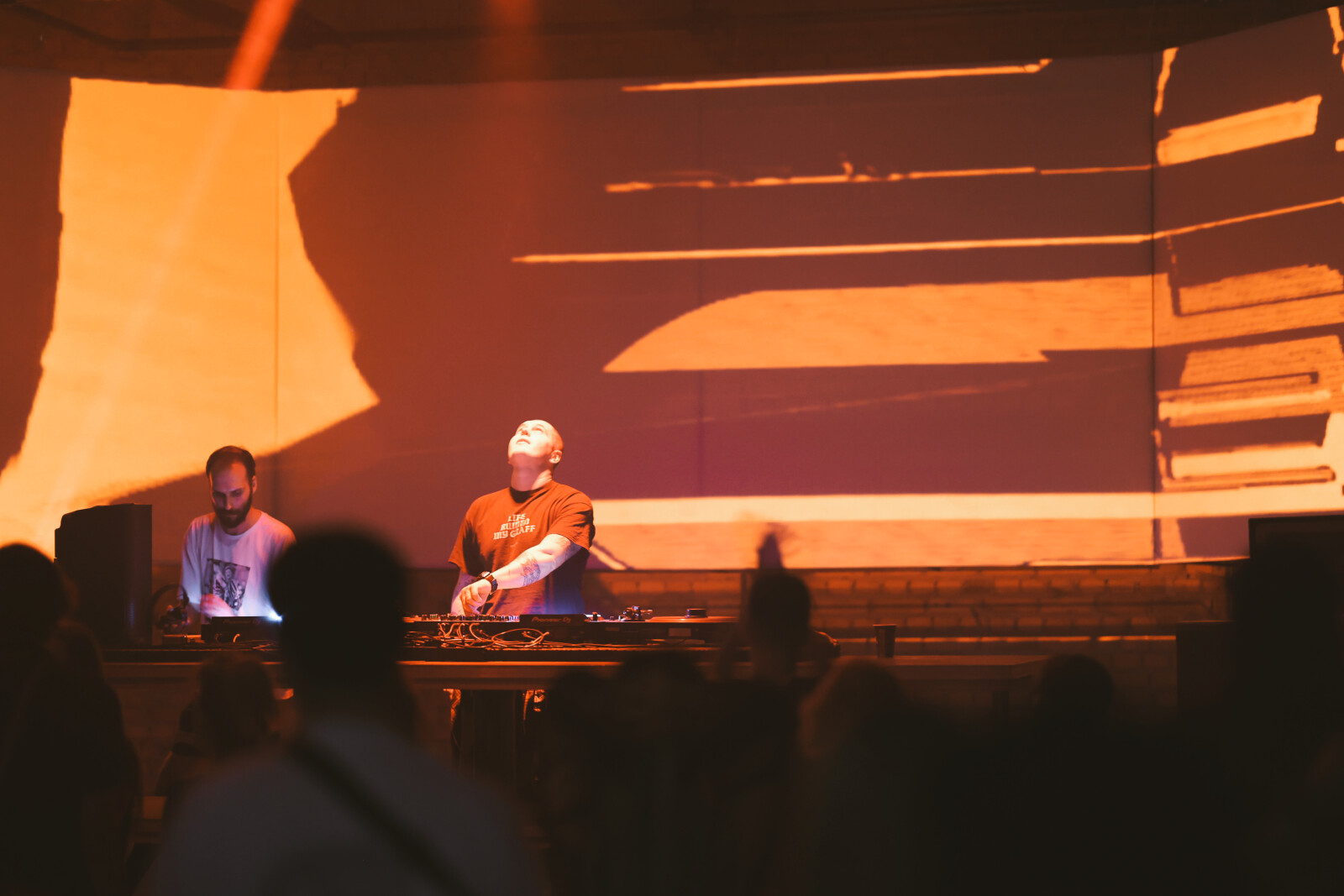
“You cannot build democracy without building a community,” says Anton Nazarko, co-founder and director of Some People, a vibrant cultural centre in Kharkiv, Ukraine’s largest eastern city, just 25 kilometers from the Ukrainian Russian border. “It’s by bringing people together that we make positive changes,” he continues.
Kharkiv was always a city defined by youth. Before the full-scale war, it was a university city – young, creative, and constantly renewing itself. “Kharkiv was always Ukraine’s cultural capital,” Anton relates. “We had lots of students who’d come to live the five best years of their lives here. Ours was a city of art, culture and energy.”
This identity collapsed overnight after the start of Russia’s full-scale war against Ukraine.
“All the young people left,” he says. “A million people remained in a city stripped of culture.” Anton – a successful businessman with a decade of entrepreneurial and cultural experience behind him running media outlets, a sneaker business and coworking spaces – felt in his bones that to save Kharkiv’s future, it was important to act immediately.
“I knew that if we didn’t do something now, our city would stagnate,” he explains. “A city is not just buildings – it’s the social contract between people and how they live together. The war broke this social contract, and we couldn’t wait until it ended to fix it.”
In 2023, the Some People team decided to create a new multi-functional cultural space for the people of Kharkiv, who live under constant threat of ariel bombardment.
Building a bomb shelter to host parties
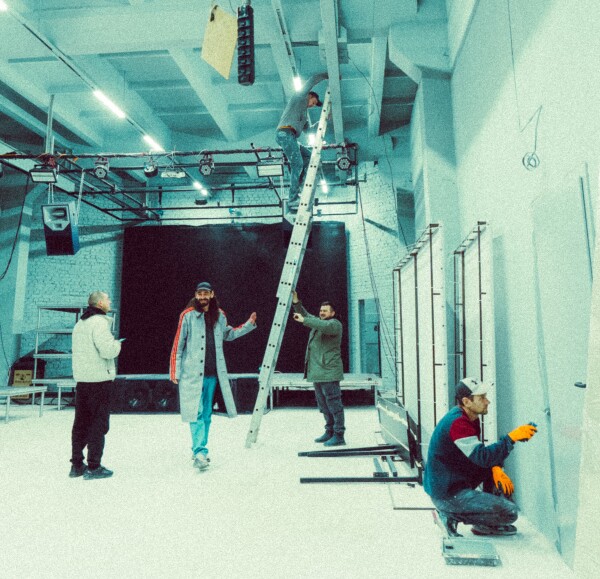
The team identified a discussed Soviet-era refrigerator factory and set about converting it into a multi-use cultural venue and a platform where, as Anton puts it: “We could rethink the future of our city, and how we will live in it.”
This was no easy task. “It was heavy construction work,” he explains. “We had to break old concrete walls and build new ones, install fortified doors and ventilation systems. Our main stage is a certified bomb shelter.”
Crucially, Some People did not wait until the venue was finished to start programming. They ran activities during the building works, a punishing schedule that continued for two years.
“We’d build one part, and then we’d have to clean everything to get it ready for a theatre performance, or a musical set or to host an electronic music party,” he says.
The Some People team put most of their money and all their energy into the venture, but they could not imagine acting otherwise. “We love our city,” he explains. “We don’t want to live anywhere else. If we want our children to grow up and stay in Kharkiv, we must make this a place they would want to live. If we didn’t do this, nobody else will.”
Seeding an ecosystem that builds social cohesion
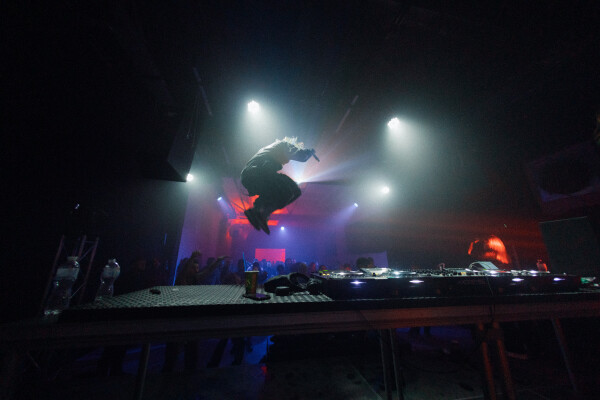
Today, Some People is far more than just a venue. It has become a catalyst for reviving Kharkiv's cultural ecosystem.
Some People’s School of Creative Industries uses music as a culture promoting venue during this time of war, and it has trained young people who have gone on to found other spaces across the city.
Anton believes that this competition is good for Some People. “We strengthen each other,” he says. “Three years ago, there was nothing. Now, we have a huge underground alternative scene in Kharkiv.”
The venue also serves an important social cohesion function, as it brings together people who would otherwise never meet.
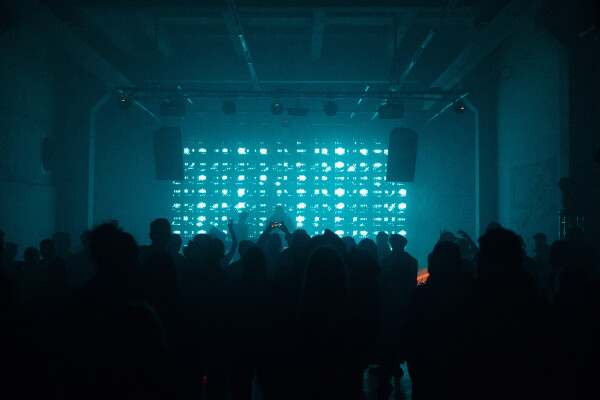
“Civilians and military meet and speak to each other here. Soldiers and LGBTQI community members go to the same party, and that’s not a problem. They are all people who choose to stay in Kharkiv and can dance on one dance floor all night and give each other hugs.”
Some People’s success has attracted the attention of international cultural icons. Anton recounts approaching the director of the Tresor Academy, associated with Berlin’s legendary Tresor club, at a conference.
“I said hello and told him we were building a club in Kharkiv,” he recalls. “He said: ‘Oh, Some People. Everyone’s talking about you’.”
This August, Tresor Academy held a three-day collaboration with Some People, bringing Europe’s leading cultural mangers to work with young Ukrainians from across the country.
The Some People venue hosts other impactful local cultural initiatives such as Teatr Nafta (an EED grant recipient). Anton’s own music project TYSK is collaborating with the drummer of The Prodigy, and they released a joint track in August.
Anton sees these partnerships as a validation. “It’s like a stamp of quality about our what we are doing,” he says.
EED: Breathing space that changed everything
A critical turning point for Some People came when US funding collapsed, leaving them “in chaos and in debts”. They were at breaking point.
“EED gave us time,” he relates. “They gave us breathing space to keep the lights on, pay rent, and pay our team.” With that stability, they were able to finish building a cinema – the first cinema to open in Ukraine since the start of the full-scale war and pursue other funding opportunities, while negotiating commercial sponsorships and building earned revenue through ticket sales and their bar. Their current funding mix is around 60 percent donor grants and 40 percent commercial income.
Asked about future, Anton has a concrete ambition: Kharkiv as European City of Culture by 2035.
He grounds this in a sweeping historical philosophy, noting that throughout history, the most powerful cultural movements have emerged when opposing forces collide. Kharkiv today is the biggest city on the front line of a war between democracy and autocracy and sits on exactly such a fault line.
“I think we can do it,” he says with quiet confidence. “There is amazing energy in our city. I tell our young people, we are not just dancing to the music. They must take this energy and transform it into music, streetwear, into new culture for the world.”
“If our artists are ready," he says, “we will be the next great cultural city in the world. We will have this chance. And we must take it.”
This article reflects the views of the grantees featured and does not necessarily represent the official opinion of EED.
This initiative was supported thanks to the contribution of the European Union to EED.
This article includes an AI-generated audio version to offer readers an additional way to engage with the content. As the narration is produced using automated voice technology, occasional inaccuracies may occur.