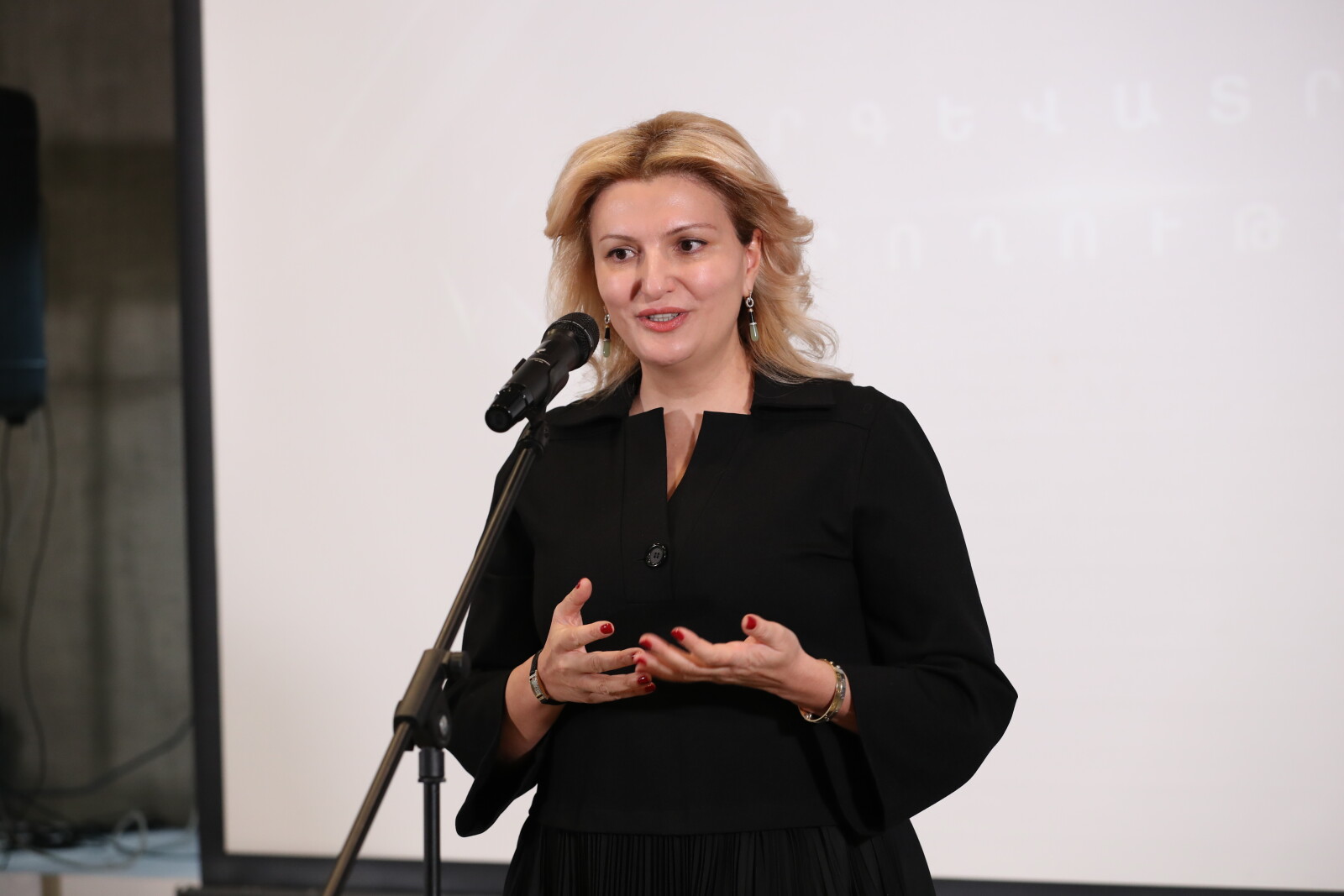
Arevik Sahakyan turned a small outlet into one of Armenia’s most trusted independent news platforms and a watchdog of democracy
“We were broadcasting everything,” Arevik Sahakyan recalls. “There were no pauses or interruptions. We were showing exactly what was going on.”
It was 2018, and the streets of Yerevan were filled with protesters. As police moved in to disperse the crowds, Arevik’s team at Factor TV continued filming. Their filming was handheld, at times unstable and often chaotic. There was no studio distance or no editorial buffer. What appeared on screen was what was happening.
At one point, protesters and journalists were pushed back. It was, she recalls, the kind of moment when the instinct to withdraw is immediate, but Factor TV stayed and continued filming.
For many viewers, this was their first sustained encounter with Factor TV, as a media presence that did not look away.
“What is this Factor?”
By then, Arevik had already spent more than two decades in Armenian journalism. She had entered the profession in the mid-1990s, at a moment she describes as unusually open and loosely regulated, when many independent voices emerged.
That openness narrowed after the assassination of Armenia’s prime minister and parliamentary speaker in 1999, an event that marked a turning point not only in politics but in the overall media environment.
The shift was gradual enough to be absorbed. Television channels continued to broadcast, newspapers continued to publish, but the space for genuine independence contracted. As Arevik tells it, journalists did not need formal instructions to understand the limits; they learned to recognise them.
By the mid-2010s, however, that system had begun to loosen, less because of political reform than because of technological change. Digital platforms made control harder to sustain, and new outlets began to emerge outside the traditional structures. It was in that context that Factor TV was founded.
“We thought it would be a niche outlet,” she says, recalling the early discussions, when their idea was to create a platform that would focus on civil society, giving visibility to voices that rarely appeared in mainstream coverage.
That expectation did not last. The turning point came with an investigation into officials and their relatives who had avoided military service through corruption. “It exploded,” she says. The story moved rapidly – across media, into parliament, and into public debate – and remained there long enough to force a response. People started asking about Factor.
From the outset, Arevik defined that newsroom in relatively strict terms. “We consider ourselves watchdogs of democracy,” she says.
This stance defines the editorial choices that follow from it: a refusal to prioritise entertainment, an avoidance of click-driven content, and a consistent focus on investigations, human rights reporting and institutional accountability.
“If you lose trust, you lose everything,” she says. In a media environment where many outlets are openly aligned with political or business interests, that trust became a powerful asset.
Factor TV now reaches tens of millions of viewers across digital platforms, making it one of the most widely followed independent outlets in Armenia. Its investigations have led to criminal inquiries, parliamentary scrutiny and responses from state institutions on issues ranging from corruption and monopolies to environmental violations.
For Arevik, however, these outcomes are less a measure of success than an indication that journalism can still exert pressure within the system. “When your work leads to consequences,” she says, “you understand why you are doing this.”
Freedom under pressure
Today, Factor TV operates in an increasingly polarised environment.
“Hate speech against journalists is very high,” Arevik says, noting that it comes not only from opposition actors but also from those in power.
“This is the most worrying part,” she adds, “when those who should protect democratic standards contribute to this environment.”
The result is a landscape in which independence is not only difficult to maintain but also constantly contested. “If you criticise one side, you are attacked. If you criticise the other, you are attacked again.”
The signals, as she describes them, are often indirect but widely understood. She recalls an incident in parliament when a senior official struck a Factor TV journalist’s microphone – an act that, while minor in itself, carried a broader meaning in the absence of any formal condemnation. Such gestures accumulate, shaping expectations about what is acceptable and what is not.
The constraints are not only political. They are also financial. Armenia’s media market remains limited, and the relationship between business and politics complicates the possibility of sustainable, independent funding.
“Without international support, it is very difficult to remain independent,” she says.
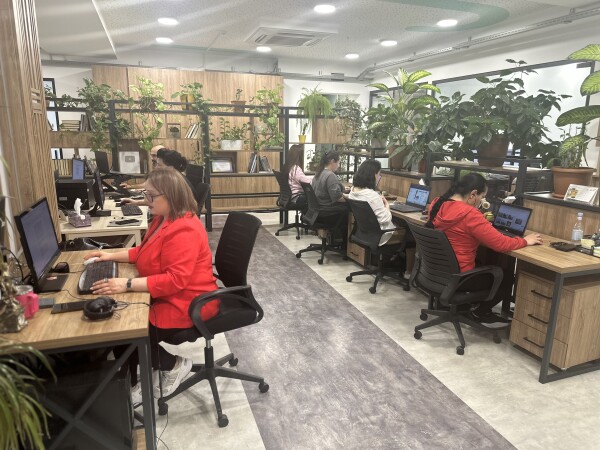
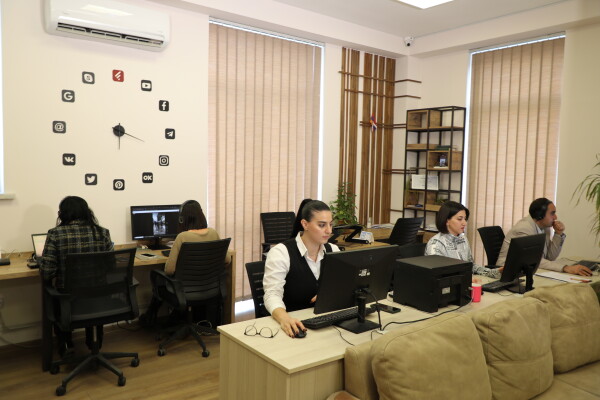
The fragility of that model became clear when major funding sources withdrew. The sudden cessation of USAID support forced Factor TV to reduce staff, cut programming, and implement cost-saving measures. EED’s sustained multi-year support allowed the newsroom to maintain its core activities at a moment when contraction would otherwise have been unavoidable.
“This kind of support is essential if independent media are to operate at all in this environment,” she says.
The pressures facing the newsroom are not static. In recent months, Arevik describes encountering a more disorienting development: AI content mimicking Factor TV itself – its visual identity, tone, even formatting – circulating online with entirely different narratives attached. “They are trying to duplicate us,” she says.
In one instance, actors linked to pro-Russian networks created what she describes as a kind of “avatar” of the outlet, using its style to lend credibility to false or misleading claims. The effect is less immediately visible than traditional disinformation; it works by borrowing trust rather than attacking it directly.
“Sometimes it is difficult even for us to understand what is real,” she says.
The response, as she sees it, is less about a single adjustment than about continuous adaptation. “You have to run all the time, just to stay in your place.”
Things can change quickly
For Arevik, the question of independent media is inseparable from the question of democracy. “Democracy cannot survive without independent media,” she says. “It’s impossible.”
Asked who she considers a hero, she does not turn to public figures. “For me, a hero is an ordinary person doing their job with integrity. A journalist who works honestly, who respects the profession, who is devoted – that is a hero.”
“Journalists are under pressure in Armenia,” she says. “Salaries are low. The environment is very stressful.” That they continue, she suggests, is itself significant.
What concerns her today is not only the domestic environment but the degree to which its fragility is understood elsewhere. “Sometimes I feel that our partners in the West underestimate how fragile this is,” she says. “How quickly things can change.”
Support for independent media, in that sense, is not simply a technical matter. It is a political decision about what kinds of institutions are allowed to endure.
“If you want democracy to survive, you have to support those who are protecting it,” she says. The alternative is not difficult to imagine.
“If independent media disappear, everything else becomes much easier to control. You cannot build democracy without independent journalism. And you cannot expect media to survive on its own,” she says.
This article reflects the views of the grantees featured and does not necessarily represent the official opinion of the EED.
This article includes an AI-generated audio version to offer readers an additional way to engage with the content. As the narration is produced using automated voice technology, occasional inaccuracies may occur.