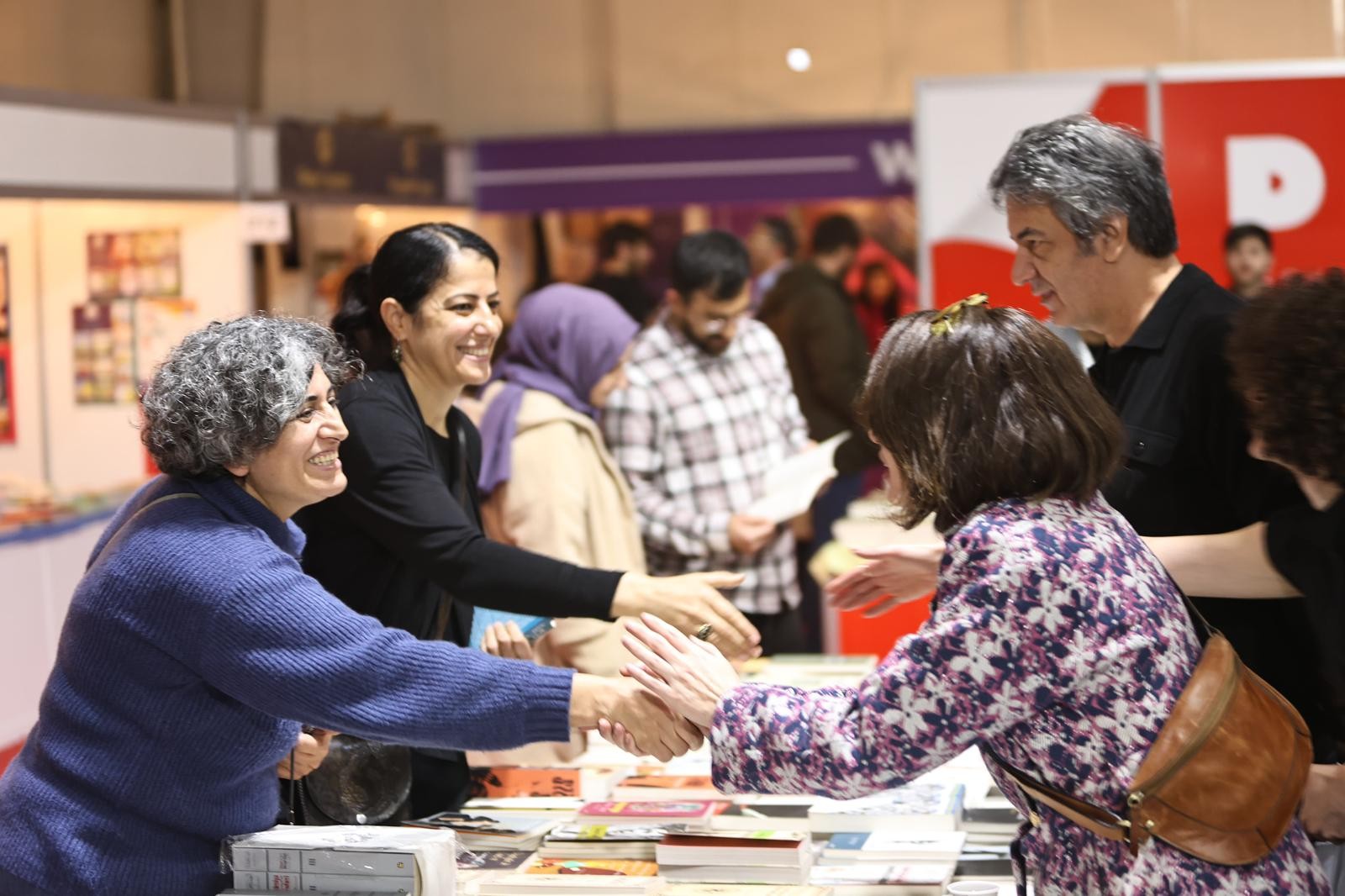
Avesta knows that a language is the air that a culture breathes. Literature is how a culture speaks to itself across space and time.
Young people, especially those from marginalised backgrounds, can read books and learn who they are and where they come from. But for most of Turkey’s history, Kurds didn’t have this right, and no one was willing to publish in their language or about Kurdish issues.
In 1995, the establishment of Kurdish publishing house Avesta Yayınları in Istanbul was an act of defiance: publishing Kurdish books that celebrate and explain Kurdish culture in a country that had only lifted a ban on speaking the language four years earlier.
“Language is like the scent of a rose. If a flower had no fragrance, it would lose its meaning,” says Songül Keskin, one of Avesta’s founders. “Without language, a people cannot exist. If you are a people, a nation, you exist through language.”
Gül Hür, another member of the Avesta family, says publishing in Kurdish is an inherently political act in Turkey, which has long tried to marginalise the Kurds and erase their culture.
“By underlying the importance of Kurdish art and literature, you’re saying, "We are here. We have a culture, history and language,” Gül says.
She maintains that acknowledging minority cultures is a prerequisite for democracy. “Without accepting our existence, we can’t talk about democracy,” she says.
Gül’s own relationship with her native Kurdish language Zazaki blossomed in the village and at home, singing songs and talking to her family. Later, she encountered the written form, which expanded and matured her understanding.
“For me, literature didn’t start my Kurdish identity, but it gave it structure, history and continuity. It turned scattered memories, songs and stories into something I could study, question and consciously claim as my language and my people,” Gül says.
Thirty-Year Journey
When setting up books at a fair and seeing all the titles they’ve published over the years lined up together, Songül feels proud of how far they’ve come. Avesta was founded with “less than nothing”, and a modest goal of publishing 50 titles.
Over thirty years later, they’ve published close to 1,000 titles under 70 categories, and translations into Kurdish and Turkish from nearly 20 languages, often focusing on minority cultures within Turkey and the wider region.
Avesta was set up with the motto “in search of missing cultures”, with a mission of giving a voice to the voiceless, regardless of commercial incentives. “We never asked ‘Will this book sell?’ If a book needed to exist, we printed it,” Songül says.
Under the "Eastern Wind" series, Avesta has featured many modern Middle Eastern literary titles, and the "Shahmaran" collection has published around 30 works by Kurdish women. Avesta also functions as a kind of cultural centre, organising book talks and other events.
Alongside just two or three other actors, Avesta helped pioneer Kurdish publishing at a time when Kurdish literacy was almost nonexistent, and books often needed to be brought from abroad at no small risk. Today, there are almost 40 Kurdish publishing houses.
They have helped encourage Kurdish writers who couldn’t even learn their own alphabet in school to publish in their native tongue.
“When they found a place to publish, saw the high quality and felt they were valued, they started writing in Kurdish,” Songül says.
Avesta also prides itself in being independent of the government or any political group, not an easy task in Turkey’s factionalised political landscape.
“For 30 years, we've tried to keep Avesta at arm's length even from our own personal opinions,” Songül says. “If you're not free yourself, how can you produce books full of different ideas?”
Publishing Under Pressure
Avesta’s journey hasn't been easy. Finding sellers willing to accept Kurdish books is challenging. It has faced constant pressure from the government, which regularly bans many of their books, often on a seemingly arbitrary basis. “The content doesn’t matter at all. Being written in Kurdish or about the Kurds is enough,” Songül explains. “For example, our book about Yezidis was banned, and it only contains prayers. Nothing political whatsoever.”
Before government reforms modestly increased Kurdish rights in the early 2000s, Songül was detained more times than she can count, just for selling books. After the reforms, and particularly during the peace process from 2013-15, life became easier, but in 2015 the ceasefire with the Kurdish militant PKK fell apart, and the government once again cracked down on anyone supporting Kurdish identity. “We're still facing the same difficulties,” Songül says.
In 2016, in an incident they consider intentional, a fire at their warehouse in Diyarbakır burned 3,000 books, and they had to close their bookstore, which they’d opened in 1999.
Today the future is brighter. Late last year, they opened a new venue in Diyarbakır’s historical central Sur neighbourhood that has a gallery, a bookshop and a library. This will become Avesta’s new headquarters.
“When I see where we started and where we've come, I feel like we've made a revolution,” Songül says.
This article reflects the views of the grantees featured and does not necessarily represent the official opinion of EED.