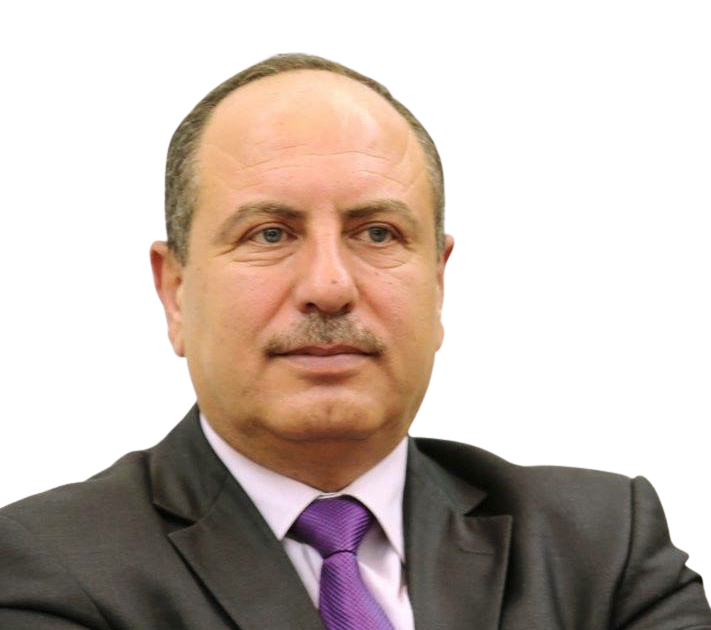
Issam Younis has spent 38 years documenting human rights abuses in Gaza. Now sanctioned, defunded, and living in exile, the general director of Al Mezan insists that international justice remains the only path forward
Before the 7th of October 2023, Issam Younis and his colleagues of the Al Mezan Center for Human Rights used to warn visiting European diplomats that Gaza was about to explode. They described the reality of life for a population of 2.2 million people crammed into 360 square kilometers under a blockade in place since 2007, completely isolated and denied basic human rights, unable to “swim or to breathe” their noses just above water. They recommended action, but nobody acted. It was constant crisis management: reconstruction, more money, more food.
There is one key word Issam returns to constantly: accountability, or rather its absence.
“You cannot live in a situation where perpetrators feel that they enjoy impunity,” he says. “That they cannot be subjected to the minimum requirements of justice. If there had been accountability before the 7th of October, the 7th of October would not have taken place. Period.”
Based in the Gaza Strip, Al Mezan Center for Human Rights is one of the most prominent human rights organizations in Palestine, documenting violations of human rights by perpetrators from all sides. Its data is regularly used by OCHA and in other UN reports, informing the positions and statements of UN members, and by the Ministry of Health. “It is the best available,” Issam says.
A catastrophe
The past three years have been unprecedented in the Gaza Strip. The estimated death toll has exceeded 73,000 people, over 18,500 of them children. Gaza’s population, many of whom have been displaced dozens of times, is now confined to one-third of the pre-war territory, and faces a catastrophic humanitarian situation. The list of so-called “dual-use items” denied entry to Gaza has got longer, with even watermelons, onions, oxygen containers, mobility aids and cancer drugs denied access.
“A genocide is being executed in a very tiny geographical area,” Issam says. “Crimes are live streamed. The intention is to kill and destroy as much as possible.”
Al Mezan’s work has been transformed over this period. Before October 2023, field workers operated across Gaza’s five areas. Since then, most staff have been displaced over fifteen times, and their homes have been destroyed. Al Mezan’s offices in Rafah in the south and Jabalia in the north have been destroyed, and their headquarters in Gaza City severely damaged, and it has been forced to shift most work online. Ongoing attacks make any travel in the Gaza Strip extremely dangerous. The collapse of infrastructure, severe restrictions on movement, and ongoing disruptions to telecommunications and internet services make it hugely difficult for Al Mezan staff to communicate with affected communities.
A year ago, Al Mezan was one of three Palestinian organisations to be designated for sanctions by the United States for its collaboration with the International Criminal Court. Its bank accounts have been frozen. It has lost funding, access to IT services, US staff, and the impact of these sanctions has been felt across Europe, as partners and donors assess how to continue to continue to support them without putting themselves at risk.
Issam sees these sanctions as part of a broader assault on international justice.
“Our work is to engage with civilised mechanisms created by civilised nations to address such situations, he says. “The source of professional work is civil society. Sanctioning us undermines the international rule of law.”
EED funding has supported Al Mezan to continue to work at this highly complex time.
Determination to keep going
Al Mezan’s staff in Gaza now work on a mainly voluntary capacity, even as prices for basic commodities have doubled and tripled.
They have adapted their operations to ensure a basic level of activities, and they continue to publish articles and reports several times a week. Their most recent report is on the cultural devastation in Gaza, which Issam views as part of this genocidal logic.
“It’s the intentional destruction of everything – the linkage between people and place,” he says. “A square here, a church, an ancient site. They intentionally destroyed all this to sever the link between people and place. Palestinians have a history and this history is being deleted.”
He notes that many of these sites are protected under international law. Their destruction reflects the absence of accountability.
Despite the extreme pressures on their work, Al Mezan makes no concessions on their methodology.
“We are not a media-based organisation,” he says. “We are not under pressure to rush. We need to investigate and to meet the victims. Without meeting the victims, we cannot do the work.”
He just wishes they had more staff. “The problem is not with the quality of our staff's work,” he says. “We need hundreds of field workers to cope with this situation. It's too much.”
Al Mezan continue to do their advocacy work too, and Issam will shortly travel to Geneva to address the Human Rights Council.
Kajsa Ollongren, the former EU Special Representative for Human Rights, called for the immediate withdrawal of the sanctions. A coalition has recently sued the US administration over the sanctions. Issam is cautiously optimistic.
No alterative to the rule of law
Asked how Al Mezan can be supported in their work, Issam is blunt. “The time for solidarity statements is over,” he says. “It is time for action. There are many mechanisms at the international community’s disposal – from arms embargoes to sanctions on settlement products to suspending agreements, to activating the EU Blocking Statute.”
He argues that silence amounts to engagement in atrocities, and that action on Gaza is essential for wider international peace and security.
“If there is no accountability in Gaza, there will be no accountability elsewhere,” he warns.
“Any alternative to the rule of law is costly,” he says. “It’s a moment of truth, I know it’s not popular, but for people who have lost everything and been subjected to this horror – people like us. We owe them the message that there is still hope, that there is still a chance.”
This article reflects the views of the grantees featured and does not necessarily represent the official opinion of EED.
This article includes an AI-generated audio version to offer readers an additional way to engage with the content. As the narration is produced using automated voice technology, occasional inaccuracies may occur.