Welcome to the October edition of EED News, which this month is focused on Ukraine.
While our focus of this newsletter is Ukraine, I want also to take this opportunity to acknowledge the landmark moment for democracy in Serbia this month, where parliamentary elections delivered a decisive victory for the student-led movement. This was a powerful vindication of nearly two years of peaceful protest, with students and citizens taking to the streets day after day demanding accountability, rule of law and an end to corruption. The courage and persistence of Serbian students, civil society, citizens and independent media is remarkable, as they held firm in the face of physical intimidation, legal pressure and online attacks. EED partners, particularly media partners, played an important role in ensuring access to independent information and ensuring that democratic accountability stayed at the centre of public debate.
As Serbia enters a new political chapter, independent media and civil society will remain vital in turning the hopes behind this victory into lasting institutional reform and in safeguarding the country’s democratic future. EED looks forward to continuing to support the vital work of democratic actors across Serbia.
This October, EED hosted a series of events
highlighting the essential role of Ukrainian civil society are playing in shaping the country’s democratic future. On 13 October, together with the
International Centre for Ukrainian Victory (ICUV), EED hosted a presentation of the 2026 Shadow Report on Ukraine’s EU accession process, prepared by
Anti-Corruption Action Centre (AntAC), the
MEZHA Anti-Corruption Center and the
DEJURE Foundation. Titled “
Ukraine and fundamental reforms in 2026: moving forward or sliding back?”, the discussion examined Ukraine’s progress in judicial reform, anti-corruption efforts and the protection of fundamental rights, focusing on Chapters 23 and 24 of the EU accession negotiations.
On 20 October, EED and the
Chatham House Ukraine Forum brought together Ukrainian civil society, independent media and European policymakers in Brussels to discuss how Ukraine’s recovery can be better aligned with its EU accession process. A key focus was the distinct needs of frontline and pre-frontline communities, where continued Russian attacks, displacement and pressure on local services create challenges. Drawing on the perspectives of Ukrainian
journalist Erik Brynza and Anastasiya Hryshko, Executive Director of the
Kherson Regional Charitable Foundation UNION, participants examined how local knowledge and independent voices can help guide international support, strengthen accountability and ensure that recovery efforts reflect the realities of communities on the ground.
On 27 October, EED hosted
LANDING, a documentary screening, exhibition and discussion organised with
Street Cultures Development from Otyrkhka and
Some People from Kharkiv, both frontline regions of Ukraine. The event explored how creative expression can sustain hope during war times and how cultural initiatives create spaces for connection, creativity and civic participation despite the threat of Russian attacks.
The documentary
LANDING explores how everyday activities such as skateboarding, making art and sharing music can restore a sense of belonging and help rebuild community life. During a panel discussion with representatives of
Street Cultures Development Center,
Some People and the
European Commission's Directorate-General for Education, Culture, Youth and Sport, participants explored the role of street culture and creative industries in engaging young people in community life, supporting recovery and contributing to democratic change. This inspiring event was a reminder of the power of community in the most challenging of circumstances.
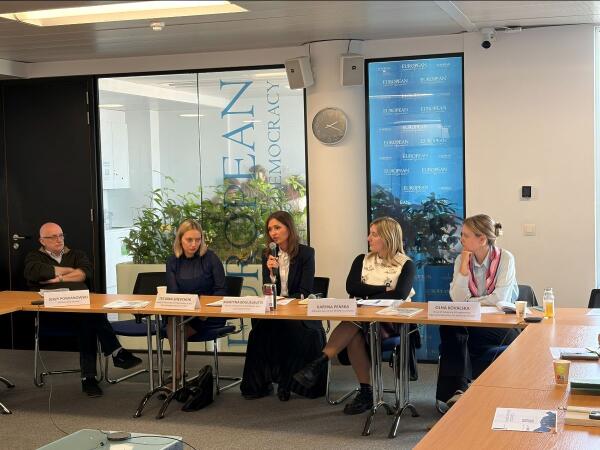
On 13 October, together with the International Centre for Ukrainian Victory (ICUV), EED hosted a presentation from the Anti-Corruption Action Centre (AntAC), MEZHA Anti-Corruption Center and DEJURE Foundation of their third independent Shadow Report, covering Chapters 23 and 24 of the EU accession negotiations. In light of Ukraine's EU accession negotiations formally underway and Russia's full-scale war approaching its fifth anniversary, the discussion focused on assessing Ukraine's progress in reforming the judiciary, addressing corruption and protecting fundamental rights.
Representatives of the three civil society organisations provided their independent assessment of the reforms, highlighting the importance of continued scrutiny and accountability as Ukraine advances towards EU membership. Tetiana Shevchuk, Head of International Programmes at AntAC, Martyna Boguslavets, Head and Founder of MEZHA Anti-Corruption Center, and Karyna Penska, Advocacy Lead at the DEJURE Foundation, presented their independent assessment of Ukraine’s reform efforts. The discussion was moderated by Olha Kovalska, Head of Advocacy & Programmes at ICUV, and highlighted key challenges, the importance of continued scrutiny and the role of civil society in ensuring accountability as Ukraine advances towards EU membership. A Q&A session offered participants the opportunity to engage with the speakers on the findings and the ongoing challenges facing Ukraine’s reform agenda.
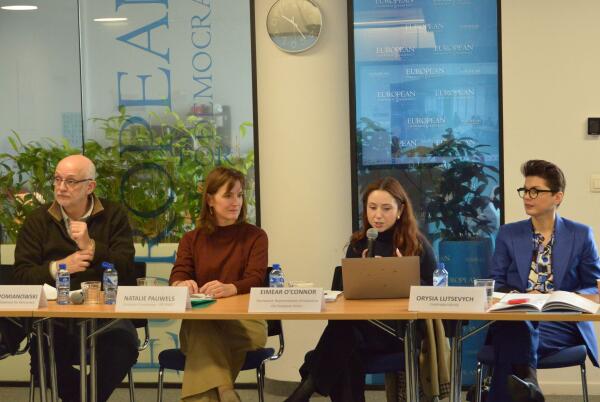
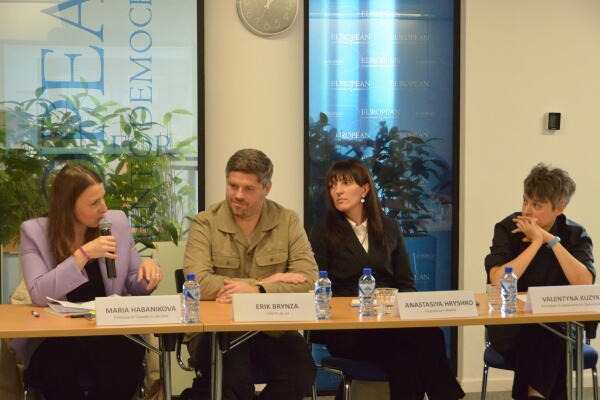 On 20 October, together with Chatham House Ukraine Forum, EED hosted "Aligning Ukraine’s recovery efforts with its EU accession agenda: What role for Ukrainian civil society?". Grounded in the Gdansk Common Message launched at the Ukraine Recovery Conference 2026, the discussion explored how civil society can play a more meaningful role in shaping and delivering recovery, ahead of the next conference in Tallinn in 2027.
The event explored how Ukrainian civil society and independent media can contribute to Ukraine’s recovery while supporting its EU accession process. Discussions focused on promoting transparent and accountable reconstruction, strengthening democratic governance, and ensuring that the needs of frontline and pre-frontline communities are reflected in recovery plans. The event highlighted the importance of cooperation between Ukrainian civil society, European institutions and international partners in aligning reconstruction with European standards and preparing for the 2027 Ukraine Recovery Conference in Tallinn.
EED Executive Director Jerzy Pomianowski opened the event, with keynote contributions from Natalie Pauwels of DG ENEST and Eimear O’Connor of the Permanent Representation of Ireland to the EU. Moderated by Orysia Lutsevych, Head of the Ukraine Forum at Chatham House, the first session examined how civil society can co-create and deliver recovery. The second session, opened by Maria Habanikova of the Embassy of Canada in Ukraine and moderated by EED’s Valentyna Kuzyk, featured Ukrainian journalist Erik Brynza and Anastasiya Hryshko, Executive Director of the Kherson Regional Charitable Foundation ‘UNION’. The event underscored the value of cooperation between Ukrainian civil society, independent media, European institutions and international partners in building a transparent, inclusive and sustainable recovery.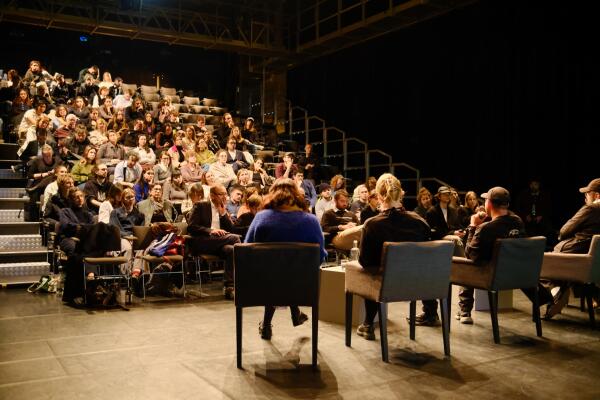
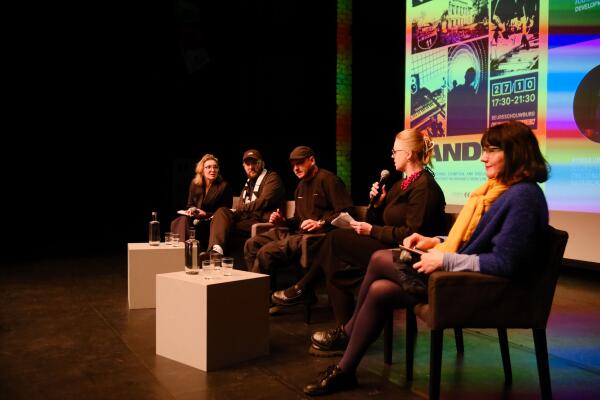

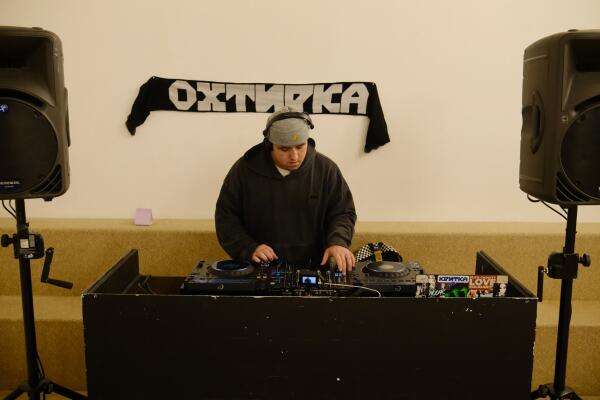 On 27 October, EED welcomed over 100 people for "LANDING", an inspiring documentary screening, exhibition, and a discussion about youth, culture, and democracy in Ukraine's frontline communities at the cultural center Beursschouwburg. The event explored how youth culture and creative expression can foster resilience, strengthen community ties and help young people in frontline cities maintain a sense of belonging amid the ongoing war.
Pavlo Ihnatchenko of Street Cultures Development Center from the town of Otyrkha and Anton Nazarko of Some People from Kharkiv joined Monica Urian, Policy Officer, European Commission, Directorate-General for Education, Youth and Sport for an engaging and open discussion on the role of street culture and creative industries in community recovery and democratic participation. The event highlighted how cultural initiatives can empower young people, sustain hope and contribute to rebuilding Ukrainian communities during and beyond the war. A photography exhibition presented images taken by young people in Okhtyrka between 2023 and 2025, and offered a personal perspective on life near the frontline.